
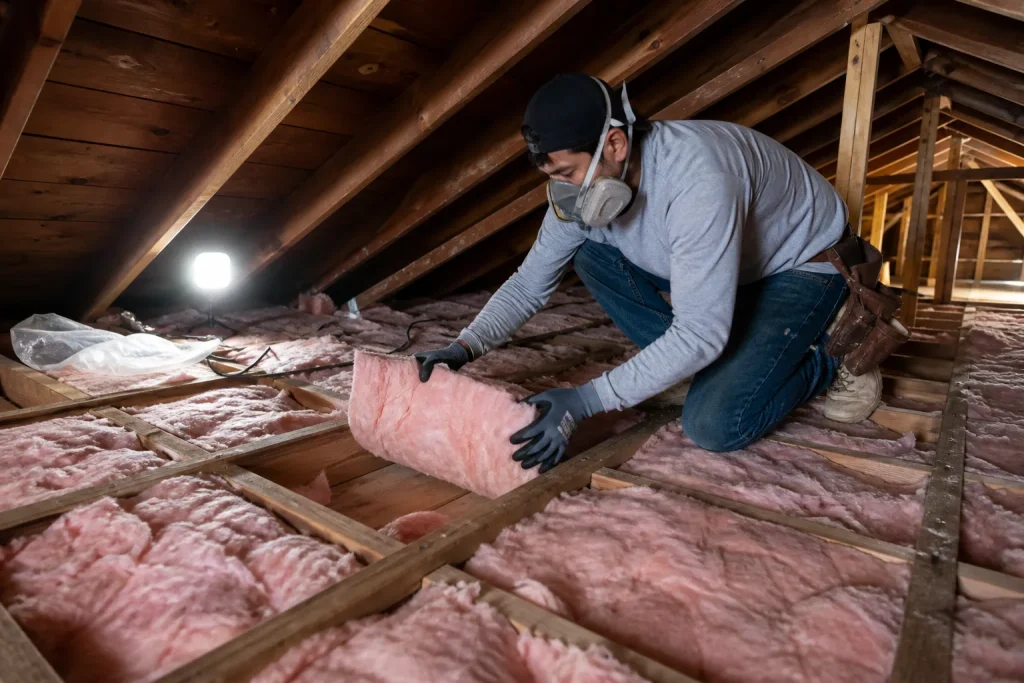
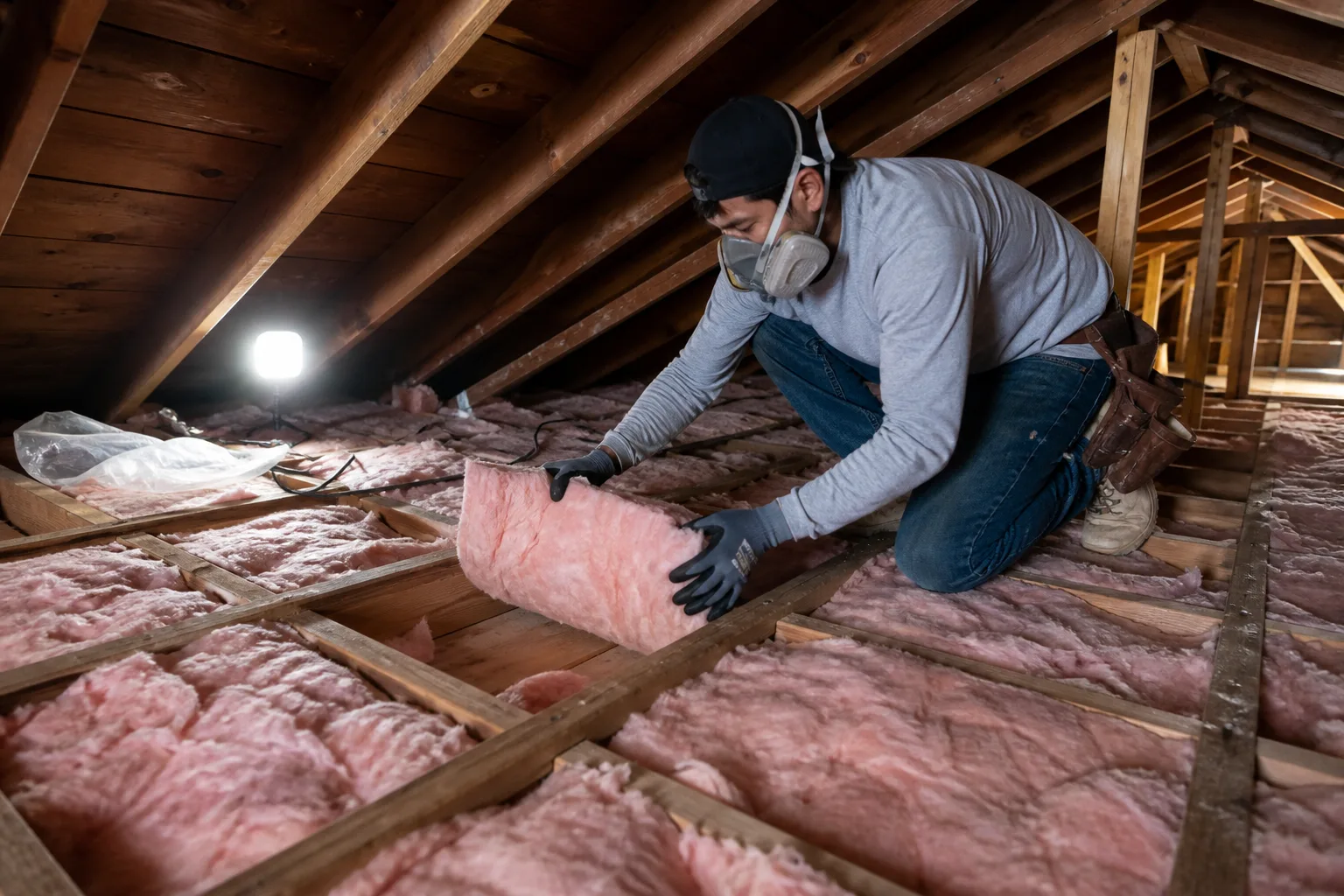
GreenFiber Attic Insulation in East Los Angeles: A Homeowner’s Guide
GreenFiber attic insulation is a blown-in cellulose product made from 85% recycled paper, treated with borate for fire resistance and pest deterrence, and we consider it one of the smartest attic upgrades for East Los Angeles homes because it handles our specific heat, old framing, and roof rat pressure better than most alternatives. It costs roughly $1.40 to $2.10 per square foot installed in East LA, depending on depth and attic access. If you’d rather not sort through the details yourself, call (866) 566-0304 and we’ll give you a straight answer on what your attic actually needs.
Most insulation companies won’t mention the roof rat issue when they quote you. We will, because it changes which product actually makes sense here.
What GreenFiber Actually Does Differently From Blown Fiberglass
The technical difference comes down to fiber structure and how the material settles. GreenFiber cellulose is made of small, irregular paper fibers that lock together when blown at the right density. Blown fiberglass is made of spun glass strands that rely on loft. In an East Los Angeles attic where summer surface temperatures regularly push past 140°F, that loft breaks down over time. Cellulose doesn’t lose loft the same way; it forms a denser mat that keeps performing year after year.
Three things matter here for an East LA homeowner:
- Settle rate: Properly installed GreenFiber settles about 3 to 5% and then stabilizes. Loose blown fiberglass can settle 10 to 20% if under-blown, which quietly erodes your R-value within the first two years.
- Class 1 fire rating: GreenFiber carries a Class 1/A fire rating thanks to the borate treatment. That’s a meaningful detail for East Los Angeles, where our urban-wildland adjacency makes fire performance a real conversation, not a spec-sheet footnote.
- Air flow resistance: Dense cellulose slows air movement through the insulation layer itself. Fiberglass does not. In a vented attic, that resistance means less hot air migrating down into your living space.
We carry GreenFiber alongside other blown in insulation in East Los Angeles options because different attics call for different products. But when a homeowner asks what we’d put in our own house out here, GreenFiber is usually the answer.
Why Borate Matters More in East LA Than Most Installers Admit
GreenFiber treats its cellulose with borate compounds, and those compounds do two jobs. The first is fire retardancy, which we covered. The second is pest deterrence, and this is where the East LA-specific advantage kicks in.
Roof rats are a documented problem in attics across East Los Angeles, Boyle Heights, and El Sereno. They nest in insulation, chew wiring, and leave waste that turns your attic into a health issue. Borate is toxic to insects like termites, silverfish, and cockroaches when they ingest it. Against roof rats, it acts as a deterrent; they prefer environments where they can tunnel and nest undisturbed, and borate-treated cellulose is less inviting than untreated fiberglass. It is not a rat elimination system. If you already have an active infestation, you need pest control before insulation. But as a long-term deterrent, it’s a genuine advantage that fiberglass can’t claim.
We pulled a GreenFiber job out of a 1920s bungalow in City Terrace last year where the previous fiberglass looked like a rat condominium. The homeowner had no idea because nobody from the previous install crew had ever looked up there after the first day. That’s the kind of thing our attic insulation crews check on every single job.
GreenFiber and East LA’s Cooling-Dominant Climate
East Los Angeles runs more cooling days than heating days. That flips the insulation math from what you’ll read on a national blog written for Minneapolis or Chicago. In a heating climate, you’re trying to trap warm air inside. In our climate, you’re trying to keep hot air out, and that changes how insulation behaves.
GreenFiber’s thermal mass effect is the key here. Cellulose is denser than fiberglass, which means it takes longer to heat up and longer to release that heat. During a hot East LA afternoon, that mass delays heat transfer from the attic down into your living space. Low-density fiberglass lets heat move through faster. The practical result: your air conditioner doesn’t cycle on as aggressively, and upstairs rooms stay closer to the temperature you set on the thermostat.
One of our customers in El Sereno with a 1950s stick-frame house told us her upstairs bedroom dropped about 6 degrees without touching the thermostat after we pulled the old fiberglass and blew GreenFiber to R-44. That’s an anecdote, but the physics behind it is well understood. Dense cellulose resists heat flow more effectively than loose-loft fiberglass at the same labeled R-value, specifically in summer conditions.
Correct Depth for R-38 and R-49: Bags Matter More Than Inches
Here’s a mistake we see constantly in East Los Angeles attics: an installer blows cellulose to a measured depth and calls it done, without tracking bag count. That’s a problem, because depth alone doesn’t tell you whether you’ve hit the target R-value. The density is what matters, and density comes from how many bags went in per square foot.
For GreenFiber in a vented attic:
- R-38 target: approximately 10.4 inches of settled depth, which requires about 1.1 to 1.2 bags per 100 square feet at the correct density.
- R-49 target: approximately 13.5 inches of settled depth, which requires about 1.4 to 1.5 bags per 100 square feet.
Those numbers assume the installer is using a density chart from GreenFiber and actually checking coverage. In a conditioned attic where the insulation sits against the roofline, the approach changes: you’ll typically use dense-pack or a hybrid with air-permeable and air-impermeable materials depending on the roof assembly. That’s a job for someone who knows the difference between a vented and unvented attic, and it’s where spray foam insulation in East Los Angeles often enters the conversation.
Always ask your installer: “How many bags per 100 square feet are you installing, and what density are you targeting?” If they can’t answer that on the spot, that’s your cue to get another quote.
The Air Sealing Step Most East LA Installers Skip
GreenFiber works best over a properly air-sealed attic floor. If the installer blows cellulose over unsealed top plates, wiring penetrations, and recessed can lights, you’re getting maybe 60% of the product’s real performance. Heat and air bypass the insulation entirely through those gaps, and in East LA’s summer, that’s exactly what you’re paying to stop.
Before any GreenFiber goes in, here’s what a thorough contractor should do:
- Locate and seal all top plates where interior walls meet the attic floor.
- Seal around plumbing vents, electrical penetrations, and bath fan housings.
- Address recessed lights: either install rated covers or box them in with fire-safe material before blowing.
- Check the attic access hatch for weatherstripping and insulated coverage.
- Verify that existing ventilation (soffit, ridge, or gable) is working before adding insulation depth, which can block airflow if installed wrong.
We’ve been on the East Los Angeles Insulation Co home side of enough other companies’ quotes to tell you: air sealing is the line between a real insulation job and a blow-and-go shortcut. If a contractor can’t walk you through their air sealing protocol in detail, they’re betting you’ll never climb up there to check.
When to Call a Pro
GreenFiber installation isn’t a weekend DIY project. The blowing machine, the density math, the attic crawling in East LA’s summer heat, and the air sealing work all point toward someone who does this every day. If your attic is accessible, dry, and you’re comfortable on a ladder, you can inspect things yourself. But installation errors with blown cellulose are hard to fix later: under-dense coverage settles into a thermal weak spot, and over-blowing into soffit vents causes moisture problems that show up years down the line.
If you’re not sure what’s in your attic right now, we offer free estimates and we’ll tell you honestly whether GreenFiber, mineral wool, or one of the spray foam brands we carry makes more sense for your specific house. We stock GreenFiber because it earns its place in East LA attics, not because it’s the only product we sell. Call (866) 566-0304 and we’ll come take a look.
The Bottom Line
GreenFiber blown-in cellulose is one of the best matches for East Los Angeles attic conditions: it’s made from 85% recycled content, treated with borate for Class 1 fire resistance and pest deterrence, and its thermal mass works harder than fiberglass in our cooling-dominant climate. The key is installation quality. Get the density right, air seal the attic floor first, and verify the bag count. Skip any of those steps and you’re leaving real performance in the bag.
If you’re in East Los Angeles and want a specialist who installs GreenFiber correctly, East Los Angeles Insulation Co offers free estimates. Call (866) 566-0304 and we’ll check your attic, talk through your options, and give you a straight answer. We carry eight brands and three installation methods, so the recommendation you get is the right one for your home, not just the one we happen to stock.
Frequently Asked Questions
GreenFiber attic insulation in East Los Angeles typically runs $1.40 to $2.10 per square foot installed, depending on the target R-value, attic access, and whether air sealing is included. For a 1,000 square foot attic, that’s roughly $1,400 to $2,100. Air sealing work adds to the total but improves performance more than adding extra inches. Call (866) 566-0304 for an exact quote, estimates are free.
For most East Los Angeles attics, yes. GreenFiber’s denser fiber structure resists heat transfer better in our hot summers, settles less, includes a borate pest deterrent, and carries a Class 1 fire rating. Fiberglass is cheaper upfront but delivers less real-world performance per labeled R-value in cooling-dominant conditions.
GreenFiber’s borate treatment deters roof rats from nesting, but it doesn’t eliminate an active infestation. If rats are already living in your attic, address pest control first, then install GreenFiber to make the space less inviting long term. East Los Angeles roof rat pressure is high enough that this matters more than national insulation guides suggest.
In most cases, yes. A standard attic blow-in with air sealing typically takes one day for an average East Los Angeles home. Larger attics, dense-pack applications, or conditioned-attic work may run longer. The prep work (air sealing, ventilation checks, access setup) is what separates a rushed job from a correct one, and we build the time in rather than cutting corners.
Written by the team at East Los Angeles Insulation Co, serving East Los Angeles since 2018.
Need Insulation Help?
Call East Los Angeles Insulation Co - licensed & insured, with free written estimates in East Los Angeles.
(866) 566-0304