
How to Choose the Right Insulation Company in East Los Angeles
Choosing an insulation contractor in East Los Angeles comes down to one test: can the company explain why one product fits your home better than another? If they can’t, they’re probably selling you whatever happens to be in their warehouse. A real specialist asks about your attic access, your wall cavities, your energy bills, and your budget before naming a product. If you’d rather skip the detective work and talk to someone who does this every day, call (866) 566-0304 for a free estimate.
Ask any insulation company in East LA what product they recommend for your attic, then ask why not the alternative. If they can’t give you a specific technical reason, they’re recommending what they stock, not what your home needs. That simple exercise separates genuine insulation specialists from installation crews with a limited menu.
The One Question That Exposes Product Pushers in East Los Angeles
The single best vetting question you can ask any insulation contractor is this: “What’s the case for and against spray foam in my attic?” A technically competent contractor will give you a nuanced answer. They’ll talk about air sealing benefits, the difference between open-cell and closed-cell foam, how East LA’s summer heat affects attic temperatures, and when blown-in fiberglass might actually be the smarter choice for your specific roof design.
A product pusher gives you a sales pitch. Their answer will be uniformly positive, light on technical detail, and heavy on urgency. That’s your cue to keep looking.
We carry eight brands including Owens Corning, Johns Manville, and Knauf, which means our recommendations don’t have to favor any single product line. When we suggest spray foam, it’s because your ceiling joists and roof deck actually benefit from an air seal. When we suggest blown-in GreenFiber, it’s because your attic has tricky access and you want recycled content. The product follows the house, not the other way around.
Why Most East LA Insulation Quotes Are Really Inventory Reports
Here’s what most homeowners don’t realize: the majority of insulation contractors in East Los Angeles operate with one or two product lines. That’s what they stock. That’s what their crews know how to install. So when you ask for a recommendation, you’re not getting an engineering opinion. You’re getting an inventory report.
This matters more in East LA than in newer suburbs because our housing stock is inconsistent. Some homes in Boyle Heights have 1920s lath-and-plaster walls and no attic access to speak of. Homes in El Sereno might have flat roofs where traditional attic ventilation doesn’t apply. A company locked into one product has to make that product work everywhere, even where it shouldn’t.
When evaluating a contractor, ask directly: “Which brands do you install, and what’s your most common application for each?” Listen for specifics. A company with genuine breadth will tell you they use Rockwool for its non-combustible properties in certain wall applications, they’ll explain why Johns Manville fiberglass batts make sense for standard stud cavities, and they’ll be honest about where open-cell foam underperforms.
If you hear something vague like “we offer options” without any technical detail behind it, that’s marketing language, not expertise.
How to Test for Real Product Flexibility
- Ask which brands they install by name. If they hesitate or say “whatever the supplier has,” that’s a red flag.
- Ask what they’d recommend for a 1940s home with no attic access versus a 1990s tract home with a standard attic. The answers should be different.
- Ask if they install mineral wool. Many crews don’t stock Rockwool because it costs more and requires different cutting tools. A company that carries it has broader technical range.
- Ask about blown-in versus batts for your specific ceiling. A specialist will mention coverage depth, settling, and R-value per inch. A generalist will say “both work fine.”
California Licensing: The 60-Second Check That Saves You Thousands
In California, insulation installation falls under the C-2 Insulation and Acoustical Contractor license. That’s a specific classification issued by the Contractors State License Board. A general contractor with a B license can legally do some insulation work as part of a larger remodel, but a dedicated insulation company should hold a C-2.
Here’s the 60-second verification: go to the CSLB website, click “Check a License,” and enter the contractor’s business name or license number. You’ll see their classification, their license status, their bonding information, and any complaints or disciplinary actions on record. A C-2 classification confirms that insulation isn’t a side hustle for them.
In East Los Angeles, you’ll encounter general contractors who’ll throw insulation into a roofing or HVAC quote without the same depth of product knowledge. There’s nothing wrong with a general contractor handling multiple trades, but when it comes to maximizing energy savings in a specific climate zone, specialization matters.
Also ask for proof of workers’ compensation insurance. Insulation work involves attics, ladders, and sometimes confined spaces. If a crew member gets hurt on your property and the company lacks proper coverage, you could be pulled into a liability situation. A legitimate East LA insulation company will show you their certificates without blinking.
Title 24 Compliance: What to Ask For, Not Just What to Hear
California’s Title 24 energy code sets specific requirements for insulation R-values in new construction and certain retrofit scenarios. A contractor who says they’re “Title 24 compliant” should be able to show you exactly what that means for your project.
In practice, Title 24 compliance means the installed insulation meets the minimum R-value for your climate zone. East Los Angeles sits in climate zone 9, which has specific attic insulation requirements that differ from coastal zones or inland desert zones. Ask for the compliance documentation: the CF-1R or CF-2R forms, or at minimum a written statement specifying the installed R-value, the product used, and the coverage area.
Verbal assurance isn’t enough. We’ve walked into East LA attics where a previous contractor said “it’s up to code” and the actual installed depth measured out to R-19 when the home needed R-38. The homeowner paid for a job that didn’t meet the legal minimum for their zone. Asking for written numbers up front prevents that.
A contractor who writes “R-38 blown-in fiberglass, 14 inches settled depth” on your quote understands the relationship between product, depth, and final performance. A contractor who writes “attic insulation, code compliant” is hoping you won’t ask follow-up questions.
East LA Red Flags: What Door Knockers and Drive-By Quotes Are Really Selling
East Los Angeles gets a regular wave of door-to-door insulation salespeople, especially during summer when energy bills spike. The pitch usually involves a “utility rebate program” or a “limited-time neighborhood discount.” Some of these programs are legitimate. Many are not.
The most common red flag specific to our area: a quote given without an attic inspection. Any contractor who prices your insulation job from the driveway without climbing into your attic is guessing. Attic access varies wildly in East LA. Some attics have four feet of clearance. Some have fourteen inches and a rat’s nest of old knob-and-tube wiring. A legitimate quote requires seeing what’s actually up there.
Other East LA-specific red flags:
- Quotes that won’t specify installed R-value in writing. If it’s not on the quote, it won’t be in your attic.
- Contractors who won’t specify installed density for spray foam. Density affects performance and cost. Vague foam specs usually mean under-installation.
- Utility rebate pitches that require you to sign “today only.” Legitimate programs don’t expire during the conversation.
- Companies that refuse to show you their C-2 license or insurance certificates. No exceptions.
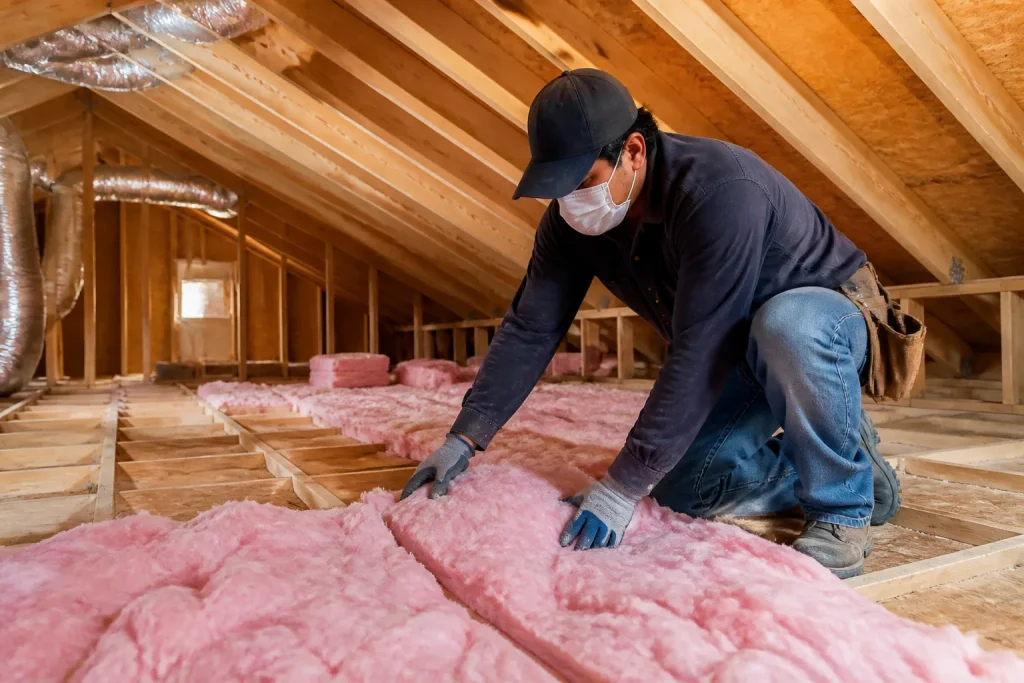
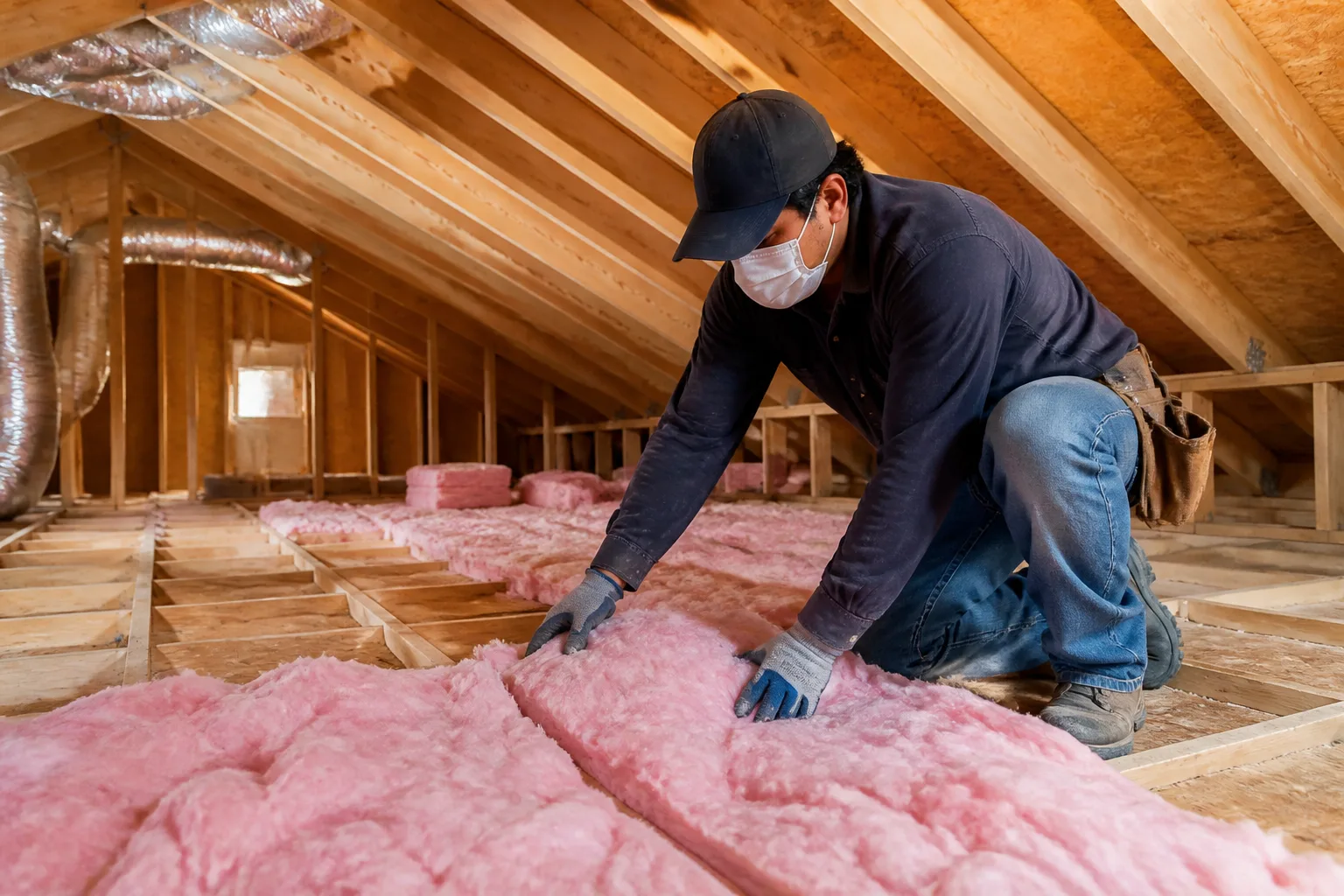
A real insulation specialist in East Los Angeles will want to see your attic before quoting. They’ll pull the access panel, inspect the existing insulation, check for air leaks around plumbing penetrations, and measure the joist depth. That takes twenty minutes. If someone won’t do it, they’re not planning to do the job right either.
Matching the Product to the Home: The Difference Between Options and Actual Choice
Lots of insulation companies in East LA say they “offer options.” What that often means is they install fiberglass batts, and if you push hard enough, they’ll reluctantly blow in some loose fill. That’s not options. That’s a default with a backup.
Genuine choice looks different. It means the company can walk into your 1920s Craftsman bungalow near Mariachi Plaza, look at the unvented attic, and explain why closed-cell foam on the roof deck makes sense even though it costs more than blown-in. Then walk into a 1960s ranch house in City Terrace with a vented attic and recommend blown-in insulation at R-38 because the home’s original batts have compressed to R-11 after sixty years.
That’s the difference between matching the product to the home and matching the home to the product. It’s also the difference between an insulation company that stocks eight brands and one that stocks whatever the regional distributor had on sale.
We carry Owens Corning, Johns Manville, Knauf, and Rockwool, among others, because different homes need different things. Rockwool’s mineral wool makes sense when fire resistance and moisture handling matter. Knauf batts work well for standard wall cavities where budget is a primary concern. There’s no single best product, only a best product for your specific house.
If you’re comparing quotes, ask each company to name one brand they don’t carry and explain why. A thoughtful answer shows they actually understand the product landscape. A blank stare tells you everything.
When to Call a Pro
If your energy bills have climbed steadily over the past three summers and you can’t pinpoint why, the answer is probably in your attic. If certain rooms in your East LA home are consistently hotter in August or colder in January, insulation is the usual culprit. And if you can see the tops of your ceiling joists through the existing insulation, you’re under-insulated, plain and simple.
Attic work isn’t something to improvise. The combination of heat, tight quarters, and older electrical wiring makes a professional assessment worth the trip charge. We’re a specialist team, not a general contractor splitting time across five trades. Insulation is what we do all day, every day.
Related services in East Los Angeles: attic insulation, spray foam, and blown-in insulation. If you’re not sure which fits your home, that’s exactly the conversation we have on every estimate.
The Bottom Line
Choosing an insulation company in East Los Angeles isn’t about finding the cheapest quote or the biggest ad budget. It’s about finding someone who can answer technical questions without a script. Specifically: can they explain the tradeoffs between spray foam, batts, and blown-in for your actual house? Can they quote a specific R-value in writing? Can they show you a C-2 license and insurance certificates? Can they tell you what Title 24 compliance means for your climate zone?
If the answer to any of those is “no” or some version of “trust me,” keep looking. If you’re in East Los Angeles and want a specialist who stocks eight brands and installs all three methods, East Los Angeles Insulation Co offers free estimates. We’ll climb into your attic, give you straight answers, and let the product fit the house. Call (866) 566-0304 to schedule yours.
Frequently Asked Questions
Check the Contractors State License Board website. Enter the company name or license number, and confirm they hold a C-2 Insulation and Acoustical Contractor classification. This takes about sixty seconds and verifies their bonding, insurance, license status, and disciplinary history.
East Los Angeles sits in climate zone 9, which calls for attic insulation of R-38 in most cases. That typically means 12 to 14 inches of blown-in fiberglass or 6 to 7 inches of open-cell spray foam, depending on the product. A reputable contractor will specify the exact installed R-value in writing on your quote.
It depends on your attic design. In unvented attics or homes where ductwork runs through unconditioned space, the air-sealing properties of spray foam often justify the higher price. In a standard vented attic with good access, blown-in insulation at R-38 delivers excellent performance at a lower cost. Call (866) 566-0304 for a free assessment of which fits your situation.
Because they’re not quoting the same job. Differences in product quality, installed R-value, foam density, air sealing work, and warranty coverage all affect price. A quote that doesn’t specify these details looks cheaper on paper but often delivers less in the attic. Ask every bidder to list the exact product, brand, R-value, and density in writing before comparing.
Written by the team at East Los Angeles Insulation Co, serving East Los Angeles since 2018.
Need Insulation Help?
Call East Los Angeles Insulation Co - licensed & insured, with free written estimates in East Los Angeles.
(866) 566-0304