
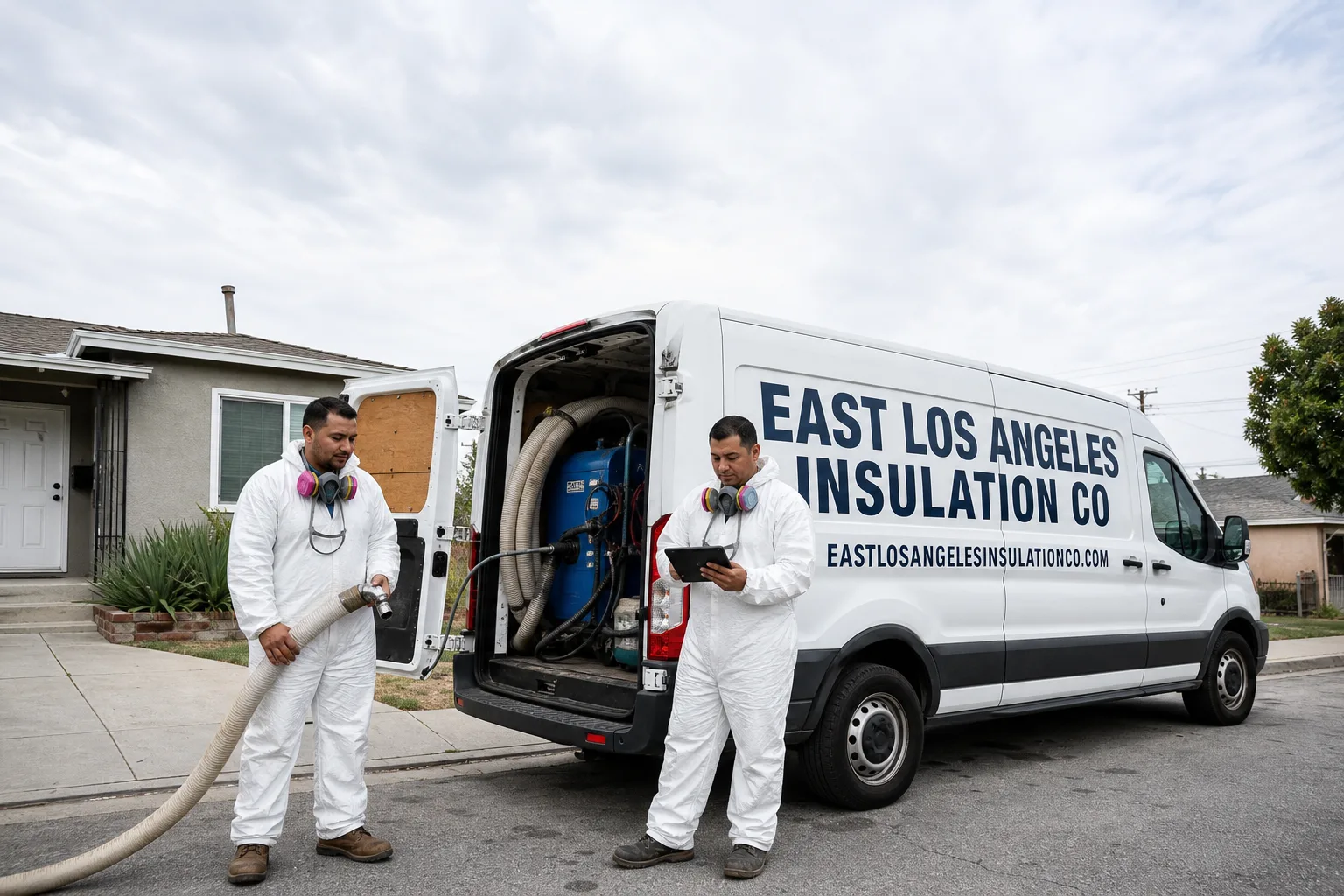
Fast, Reliable Attic Insulation Across Crestline
Attic insulation in Crestline isn’t a valley job with a longer drive. At 4,500 feet, your attic has to handle snow sitting on the roof for weeks, hard freezes, wind-driven snow working into every gap, and summer days that still climb into the 80s. Most Crestline homes were built as weekend cabins and later converted to year-round living, which means the insulation decisions made in 1965 are now costing you money every month. East Los Angeles Insulation Co sends crews to Crestline regularly, and we know what a mountain attic actually needs. Call (866) 566-0304 and we’ll come look at yours.
Why East Los Angeles Insulation Co Is Crestline’s Preferred Attic Insulation Company
We’re a dedicated insulation contractor, not a generalist picking up attic work between kitchen remodels. Ruben Acosta built this company around one trade, and that focus shows in how we diagnose a Crestline attic. We look at the air bypasses first, because at this elevation, a small unsealed plumbing penetration can carry more moisture into your insulation than a missing vent cover ever will. Our crews know the difference between a San Bernardino attic and a Crestline attic, and honestly, that gap is bigger than most people realize.
We carry eight insulation brands including Icynene, Demilec, and GreenFiber. That matters here because a mountain cabin converted to full-time living often needs a different product than a valley ranch house. Homeowners in Crestline who have worked with us appreciate that we don’t just install whatever’s on the truck. We match the product to the altitude, the roof pitch, the venting setup, and the freeze-thaw reality of life above the snow line.
Attic Insulation Removal in Crestline
Attic Insulation Removal in Crestline usually starts because the existing material is too far gone to top up. We see this constantly in homes around Lake Gregory and the older cabin streets off Lake Drive: decades-old batt insulation compressed to half its original thickness, stained from years of snowmelt wicking through the roof deck, or shredded by rodents that moved in during long winters. Leaving that in place and blowing new insulation over it just locks the problems under a fresh layer. Removal gives you a clean surface to air-seal properly, which at 4,500 feet is the step that actually stops the freeze-thaw moisture cycle from ruining whatever you install next.
A full attic insulation removal in Crestline typically runs $1.50 to $2.50 per square foot for a standard cabin attic, though tight access and steep pitches can push it higher. A 1,000-square-foot attic usually lands between $1,500 and $2,500. We remove everything down to the drywall or shiplap, bag it, and haul it off the mountain. That includes old fiberglass, rock wool, and occasional vermiculite, which we handle with the care it demands.
When Top-Up Won’t Cut It
If your insulation is wet, matted, infested, or more than 30 years old, adding new material on top is a temporary fix. The old layer keeps its moisture problem and the new insulation can’t perform through it. In snow-country attics, that trapped moisture freezes and thaws against your ceiling assembly all winter. Pull it out, seal the airpaths, then install clean.
Air Sealing Before You Reinsulate
We air-seal every Crestline attic before adding new insulation. That means foam-sealing top plates, plumbing penetrations, flue chases, and any wire holes we can reach. Skipping this in a mountain house is the most common reason new insulation underperforms within a year. Wind pushes cold air through those gaps from November to March.
Insulation Contractors in Crestline
Insulation Contractors in Crestline should know mountain construction before they quote the job. A valley crew that shows up with the same playbook they use in San Bernardino will miss the venting corrections, the air-seal scope, and the moisture signs that are specific to this elevation. We work in Crestline often enough to know which streets have original 1950s cabins, which ones got 1970s additions, and which attics are likely to have exposed knob-and-tube wiring that changes the installation approach. That’s not trivia. That’s the difference between an insulation job that works for 20 years and one that fails after the first heavy snow season.
You’re also getting a contractor who installs all three methods: attic batt, blown-in, and spray foam. If your converted cabin needs closed-cell foam on the roof deck and blown-in GreenFiber across the floor assembly, one crew handles it. No subcontractors. No finger-pointing. A typical full attic retrofit in Crestline runs $2,800 to $6,500 depending on square footage, access, and whether you need removal plus air-sealing first. Smaller top-ups on clean, dry existing insulation can run $900 to $1,800.
Focused Diagnostic Work
Attic insulation is a dedicated service for us, not an upsell attached to some other trade. That means when we’re in your Crestline attic, we’re diagnosing airflow, moisture, and thermal performance as the whole job. Most residential heat loss and heat gain happens through the attic. Around here, with snow on the roof and 25-degree nights, that’s not an abstract stat.
Products Chosen for Crestline Conditions
We stock certain products specifically because they perform at elevation. Demilec closed-cell foam handles the temperature swings and adds structural rigidity to older roof decks. GreenFiber blown-in settles into irregular cabin joist bays and offers strong recycled-content performance. The right product changes by house, and we’ll tell you why we’re recommending one over another.
Trusted Brands We Service in Crestline
We install and maintain insulation systems from CertainTeed, Icynene, Demilec, and GreenFiber, among the eight brands we carry. For Crestline homeowners, we typically steer toward Demilec or Icynene closed-cell spray foam where air sealing and R-value per inch matter most, and GreenFiber blown-in where an older cabin needs full attic coverage without tearing into the ceiling. Because we stock these locally and have crews working the mountain on a regular schedule, we can usually get a Crestline project moving within a week. Parts and material aren’t coming from two counties away.
Common Attic Insulation Problems We See in Crestline Homes
- Original weekend-cabin insulation still doing the job it was never meant to do full-time. A 600-square-foot cabin built for summer weekends in 1958 might have R-11 batts, if that. Once it became a year-round home with heat and plumbing, the attic became the biggest heat leak in the house. We find these original layers compressed, stained, and performing at a fraction of their labeled R-value.
- Crawlspaces open to mountain air and snowmelt. A surprising number of Crestline homes still have vented crawlspaces with no insulation at the rim and no vapor barrier. Cold air pours up through the floor system in winter, and snowmelt wicks into the framing every spring. It makes the attic work harder and the whole house feels drafty even with new attic insulation installed.
- Wind-driven snow through unsealed attic bypasses. In pre-code construction, plumbing vents, flue chases, and top plates were rarely sealed. The wind here isn’t strong all winter, but when it blows hard, it drives snow and cold air through those gaps. We’ve opened attics after a storm and watched snow melt directly into the insulation. Proper air sealing stops this at the source.
- Moisture from freeze-thaw cycles degrading new insulation from below. If a roof leak or condensation cycle goes unaddressed, melt water freezes at the eaves, thaws when the house heats up, and saturates the insulation layer above the ceiling. This is why we focus on venting corrections in Crestline attics before adding new material at any R-value.
Pricing for Attic Insulation in Crestline, CA
Plain numbers, because you’re going to ask anyway. Attic batt insulation on a typical Crestline cabin runs $1.80 to $3.00 per square foot installed, depending on the product and the access. Blown-in attic insulation runs $1.60 to $2.60 per square foot for a full attic retro. Attic insulation top-up, where the existing material is clean and we’re just adding depth, runs $0.90 to $1.60 per square foot. Attic insulation replacement, including removal of old material, air sealing, and new insulation, runs $3.50 to $5.50 per square foot. Attic baffles and ventilation prep runs $8 to $15 per baffle installed, plus venting corrections. Every Crestline quote is free, and we’ll walk you through the numbers before any work starts. Call (866) 566-0304 for a specific price on your attic.
We Also Serve Cities Near Crestline
Our crews service Crestline and the surrounding mountain communities regularly. We also cover Lake Arrowhead, Muscoy, San Bernardino, and Highland, so if you have a second property down the hill or family nearby, same team, same standards. Our Attic Insulation specialists handle mountain and valley jobs without skipping the details either climate demands.
Serving Crestline, CA - Our Local Coverage Area
We serve Crestline and nearby communities. Use the map below to see the area we cover. If you’re nearby, we can almost certainly help.
FAQs About Attic Insulation in Crestline
Crestline sits at roughly 4,500 feet, which means winter freezes, snow loads, and wind-driven snow, conditions a San Bernardino attic almost never faces. Insulation here has to perform across a wide temperature swing and resist moisture from snowmelt and freeze-thaw cycles. Down the hill, most attics just need R-value and basic venting. Up here, air sealing and moisture control are just as important, and skipping them is the fastest way to waste money on insulation that fails.
Almost certainly not, especially if the cabin was converted to year-round living without a full attic upgrade. We routinely find original weekend-cabin attics with only a thin mat of old batt insulation, often R-11 or less, compressed and stained from decades of snowmelt cycles. That was fine for summer weekends in the 1960s. For full-time mountain living with heat and plumbing, it’s costing you real money every winter. Call (866) 566-0304 and we’ll tell you honestly whether top-up or replacement makes sense for your cabin.
Yes, when the old material is wet, matted, infested, or compressed past usability. In Crestline we recommend removal far more often than we do in the valley because snowmelt and freeze-thaw cycles damage insulation faster here. Leaving failing insulation in place and blowing new over it locks moisture against your ceiling and wastes the new material’s performance. We’ll give you a straight recommendation on removal versus top-up after we inspect.
Snowmelt enters two ways: through roof leaks and ice dams at the eaves, and through unsealed gaps in the attic floor and crawlspace rim. In pre-code cabins, plumbing penetrations and top plates were rarely sealed, so a warm house melts the snow as it falls and the water follows gravity into any gap it can find. Then it freezes, thaws, and repeats the cycle all winter. That’s why we seal air paths before we install anything.
Yes. A properly air-sealed attic with the right R-value and correct ventilation handles both extremes. We typically recommend closed-cell spray foam like Demilec where the roof deck needs air sealing and thermal control in one layer, or a combination of air-sealed floor assembly and blown-in GreenFiber for full attic coverage. The goal is a thermal boundary that works in February and August. We’ll spec it for your specific house, not a generic template. Call (866) 566-0304 for a free estimate.
Call East Los Angeles Insulation Co for Attic Insulation in Crestline
If your Crestline home feels drafty in January or overheated in July, the attic is the place to start. We’ll inspect what you have, tell you what’s working and what isn’t, and give you a quote with real numbers. Free estimates, no pressure, and a team that understands mountain attics. Call (866) 566-0304 today.
Written by Ruben Acosta, Owner at East Los Angeles Insulation Co, serving Crestline and the San Bernardino Mountains.