
Fast, Reliable Attic Insulation Across Cypress
Attic insulation in Cypress costs $1,800 – $4,600 for a typical single-family tract home, depending on attic size, insulation type, and how much old material needs removing first. We’re East Los Angeles Insulation Co, a dedicated insulation crew led by Ruben Acosta, and we work Cypress neighborhoods every week. Call (866) 566-0304 for a free estimate. We’ll inspect your attic, measure what’s up there now, and tell you exactly what needs to happen, no guesswork.
Why Cypress Homeowners Call Ruben Acosta’s Crew for Attic Insulation
Cypress housing stock was mostly built between 1958 and 1975. The attics in those tract homes were insulated to code minimums that made sense in the 1960s and haven’t kept up with how hot summers run now. West-facing low-pitch roofs on streets off Valley View and Lincoln soak up afternoon sun until attic temperatures push past 140°F. By then, whatever fiberglass was blown in decades ago has settled and compacted. That’s what our Attic Insulation team has been fixing for Cypress homeowners, one attic at a time.
Ruben Acosta started this company doing attic work specifically. Not HVAC, not roofing, not a dozen other trades fighting for attention. Just insulation. That focus matters when you’re crawling through a 1972 tract attic off Ball Road and need someone who knows what R-value means in Cypress heat, not just someone who’ll stuff whatever batt is on the truck into the joist bays. We stock eight brands and install three methods, so the recommendation you get is the one that fits your house, not the one that clears our inventory.
Response time to Cypress is usually next-day for estimates and one to three days for installation, depending on scope. We schedule Cypress jobs in dedicated blocks so we’re not bouncing between counties and leaving a crew stuck in traffic on the 605.
Attic Insulation Removal in Cypress
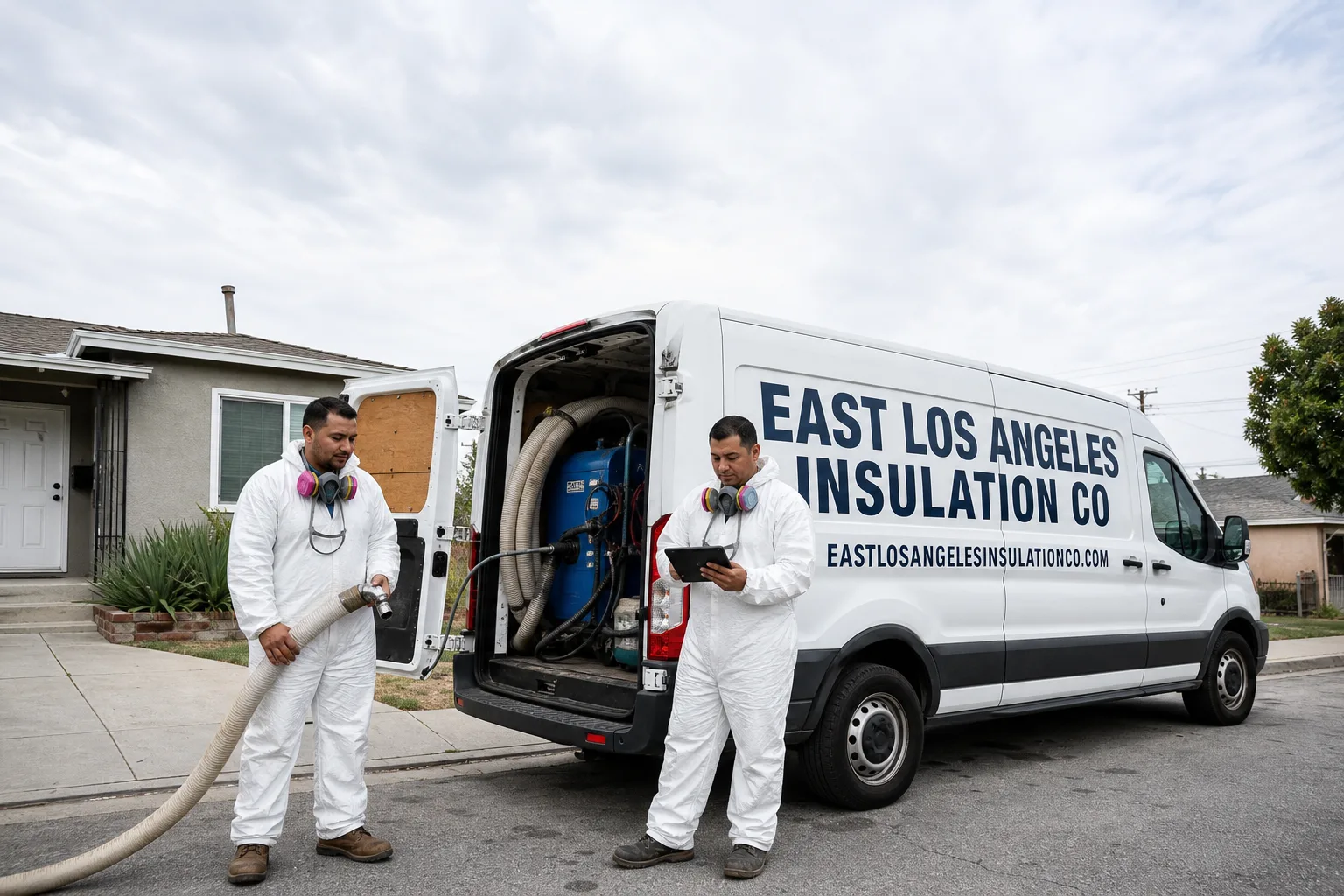
Attic Insulation Removal in Cypress is the first step on most of the older tract homes we work on, because what’s up there from the 1960s or 70s has settled, compacted, or been chewed through by rodents nesting in the blown-in fiberglass. We vacuum out the old material with a commercial extraction system, bag it, and haul it off. Then we inspect the ceiling line, wiring, and venting before anything new goes in. A typical removal job in Cypress runs $1.20 – $2.50 per square foot, so a 1,200-square-foot attic usually lands between $1,400 and $3,000 depending on depth and condition.
When Removal Becomes Necessary
If your insulation is wet from a roof leak, contaminated by rodent activity, or so compacted it’s lost most of its R-value, removal is the honest fix. You can’t just blow new stuff on top and expect it to work. The old layer acts like a lid, and the new insulation never settles properly because it’s resting on broken-down material that’s holding moisture against the ceiling.
What We Do After Extraction
Once the attic is empty, we check baffles at the eaves to make sure soffit vents aren’t blocked, verify that exhaust vents are actually moving air, and look for the corrosion pattern we see on the west side of Cypress homes. Salt-laden marine air that drifts in from the coast doesn’t stop at garage-door hardware; it sneaks into attic fasteners and radiant-barrier staples on that same sunny slope. We document what we find and tell you what needs doing before new insulation hides it.
Insulation Contractors in Cypress
Insulation Contractors in Cypress tend to fall into two camps: general handymen who’ll “do a little insulation” on the side, or factory-authorized crews that only install one product line. We don’t fit either mold. We have three installation methods under one roof and partnerships with eight manufacturers, including Demilec and Icynene for spray foam, GreenFiber for recycled-content blown-in, and Owens Corning and Johns Manville for fiberglass. So when you ask “what’s the best product for my situation,” we have an actual answer, not a sales pitch for whatever’s sitting in the warehouse.
How We Choose a Product for Your Cypress Attic
We look at your roof pitch, which direction your attic faces, whether you have can lights or a cathedral ceiling, and what your summer cooling bills have looked like. In Cypress, the priority is almost always radiant-heat control and ventilation, not deep cold-weather R-value. That means the right product for a 1968 tract home off Moody Street might be blown-in fiberglass with a radiant barrier, while a homeowner on the north side of town with a flat section might do better with open-cell spray foam from Demilec.
Working Around Your Schedule
Most Cypress jobs wrap in one day for removal plus one to two days for install. We keep the attic access clean, protect your hallway with drop cloths, and don’t leave the job until a hose check confirms the R-value we quoted.
Trusted Brands We Service in Cypress
We carry Owens Corning and Johns Manville fiberglass, Demilec and Icynene spray foam, GreenFiber blown-in, Rockwool mineral wool, Knauf batts, and CertainTeed products. Not because we collect brand logos, but because different Cypress attics genuinely need different things. A 1970s tract home with a low-pitch west-facing roof and salt-corrosion issues on the hardware doesn’t need the same product as a newer build with a sealed attic. We keep enough stock on the truck to handle most Cypress jobs without a parts run back to the supplier, which means we install the day we say we will.
Common Attic Insulation Problems We See in Cypress Homes
- West-side corrosion migrating into attic hardware. Cypress sits in a coastal-inland transition, and the same salt-laden air that foggs garage-door springs, hinges, and opener chains on the west-facing side of a house also attacks attic fasteners and radiant-barrier staples on that slope. We inspect for these while we’re up there, because a failed staple line lets the radiant barrier sag and stops doing its job.
- Compacted blown-in on sunny roof slopes. Afternoon sun on west-facing low-pitch roofs drives attic temps past 140°F. Blown-in fiberglass compresses under heat and age, and the sunny side loses R-value faster than the shaded side. Homeowners rarely notice because Cypress winters are mild, so the heat loss doesn’t show up on a gas bill until summer hits.
- Batts fallen away from the ceiling line. Original 1960s – 70s batts get disturbed by re-roofs, HVAC retrofits, and rodent activity, then settle low in the joist bays. That leaves bare spots at the top of the batts where radiant heat pours through. We see this on nearly every older Cypress tract home we open up.
- Under-ventilated attics trapping heat. Many Cypress homes were built with marginal soffit venting and no ridge vent. Without airflow, no amount of insulation works correctly, because the attic basically turns into a convection oven every afternoon. We add baffles and intake or exhaust vents as part of most insulation upgrades here.
Pricing for Attic Insulation in Cypress, CA
Blown-in attic insulation for a typical 1,200-square-foot Cypress attic runs $1,800 – $3,200 installed, depending on target R-value and whether old material needs removing first. Attic batt insulation for the same footprint runs $2,200 – $4,000, with Rockwool mineral wool on the higher end because it’s non-combustible and moisture-resistant. Spray foam is the biggest investment at $3.50 – $7.50 per square foot, and in Cypress we typically recommend it for homes with cathedral ceilings, sealed-attic retrofits, or serious west-side heat gain. Attic insulation top-up runs $1.50 – $3.00 per square foot when the existing insulation is still sound. Call (866) 566-0304 and we’ll give you a real number, not a range.
We Also Serve Cities Near Cypress
Based in East Los Angeles, our crews cover Cypress daily, and we make the same trip for homeowners in La Palma, Los Alamitos, Rossmoor, and Hawaiian Gardens. If you’re in one of those zip codes with an attic that’s not pulling its weight, the estimate is still free and the inspection is still thorough.
Serving Cypress, CA - Our Local Coverage Area
We serve Cypress and nearby communities. Use the map below to see the area we cover. If you’re nearby, we can almost certainly help.
FAQs About Attic Insulation in Cypress
Your garage probably faces west or southwest. Cypress sits in a coastal-inland transition, so salt-laden marine air moves in from the coast and deposits on the west-facing side of houses first. Garage-door springs, hinges, rollers, and opener chains on that side oxidize noticeably faster. We see the same pattern inside attics, where fasteners and radiant-barrier staples on the west slope corrode before the rest of the attic. Call (866) 566-0304 and we’ll inspect it while we’re evaluating your insulation.
West-facing low-pitch roofs in Cypress bake in the afternoon sun until attic temperatures pass 140°F, and that heat breaks down the facing on old fiberglass batts. The batts lose stiffness, sag, and slide down the joist bay, leaving gaps at the top where radiant heat streams through. Re-roofs and HVAC work make it worse by disturbing the batts and pushing them around. The fix is removing the old material and blowing in fresh insulation with proper ventilation, which is exactly what we do every week in Cypress.
No. Cypress has a warm-summer Mediterranean climate with dry, sunny summers and mostly frost-free winters. Heating loads are modest. What you need is radiant-heat control and attic ventilation, which means R-38 to R-49 in the attic is plenty for our climate. Piling on R-60 doesn’t buy you much in Cypress and it costs more than the savings justify. We’ll tell you where the real losses are instead of upselling you on R-value you don’t need.
We run a commercial vacuum line from the attic access to a truck outside, then a technician works through the attic in sections, removing old fiberglass, compacted blown-in, and any rodent nesting material. It takes half a day to a full day for most Cypress tract homes. After extraction we inspect the ceiling line, wiring, venting, and the west-side fasteners for the salt-air corrosion pattern we’ve been documenting in Cypress. Then we’ll tell you what to install, and what it costs, before we do any of it.
Every five years, minimum. The salt-air environment near the coast breaks down attic fasteners and radiant-barrier staples faster than inland, and compacted blown-in can lose significant R-value between inspections. If you’re up there checking garage-door hardware, check the attic insulation on the same trip, especially on the west side. Or call us and we’ll do both checks during one free estimate at (866) 566-0304.
If your Cypress attic hasn’t been evaluated in years, or you’re feeling the upstairs rooms heat up like a sauna every afternoon, call Ruben Acosta and the team at East Los Angeles Insulation Co at (866) 566-0304. We’ll inspect, measure, and tell you exactly what needs doing, what it costs, and what product makes sense for your house. No pressure, no guesswork, just an honest assessment from a crew that does insulation all day, every day.
Written by Ruben Acosta, Owner at East Los Angeles Insulation Co, serving Cypress and surrounding communities.