
Fast, Reliable Attic Insulation Across Koreatown
Attic insulation in Koreatown runs $1,400 – $4,600 for a typical retrofit, with most jobs completed in one day. We work the 90005 zip code daily, from the bungalow courts off Western to the five-over-one buildings along Wilshire. If your west-facing rooms bake in the afternoon or your AC bill has doubled, the attic is usually the culprit. Call (866) 566-0304 for a free estimate, and we’ll send someone who knows Koreatown’s specific building stock.
Why East Los Angeles Insulation Co Is Koreatown’s Preferred Attic Insulation Company
We’re a dedicated insulation contractor – not a generalist splitting attention across plumbing and electrical. Ruben Acosta runs our crew, and he’s walked more Koreatown attics than most contractors have seen in a year, including plenty that needed Reflectix repair in Koreatown. The 1920s bungalow conversions and 1970s stucco apartments here have quirks you only learn by doing the work. That’s what we do.
Most Koreatown insulation jobs are retrofits in occupied buildings. Tenants are home. Attic access is a small closet hatch. Walls are original lath-and-plaster with no cavity insulation. We arrive with compact equipment that fits through a 24-inch opening, and we schedule work so residents aren’t displaced. That’s not a special accommodation for Koreatown – it’s just how the work gets done here.
Our Koreatown customers tell us the same thing: they wanted someone who wouldn’t blank out when they described their attic hatch being behind a closet rod. We know that hatch. We’ve crawled through it.
Attic Mold Removal in Koreatown
Attic Mold Removal in Koreatown typically costs $800 – $2,400 depending on square footage and how far the mold has spread into the roof sheathing. The dense, occupied buildings in 90005 create conditions where bathroom exhaust fans venting into the attic – common in older bungalow conversions – trap moisture against the underside of the roof deck. In west-facing units, the heat cycles from afternoon sun bake that moisture back into the wood, and mold takes hold in the warm, still air above the ceiling.
What the job involves
We remove contaminated insulation, treat the affected framing and sheathing with a fungicide, and air-seal every penetration that allowed moisture in the first place. Then we install new insulation matched to the space. Skipping the air-seal step means mold returns within a year or two, and we’ve already pulled failed DIY-ish patches out of attics off Normandie that grew back fast.
When Koreatown homeowners need it
You’ll notice a musty smell upstairs, dark staining on ceiling drywall near the hatch, or visible mold on rafters when you poke your head up there. If you’re renting out units in a 1920s bungalow and a tenant complains about smell or respiratory irritation, get it checked before it spreads. Mold doesn’t wait, and tenant complaints turn into code enforcement calls faster in Koreatown than almost anywhere in LA.
Attic Insulation Removal in Koreatown
Attic Insulation Removal in Koreatown runs $1,000 – $2,800, and it’s the step most homeowners don’t realize they need before adding new material. In the 90005 housing stock, we regularly pull out rock wool from the 1950s that’s compacted to half an inch, fiberglass batts chewed through by rats (roof rats love the dense tree canopy here), and old blown-in material saturated with dust from decades of open windows on the Western corridor.
Why removal matters before top-up
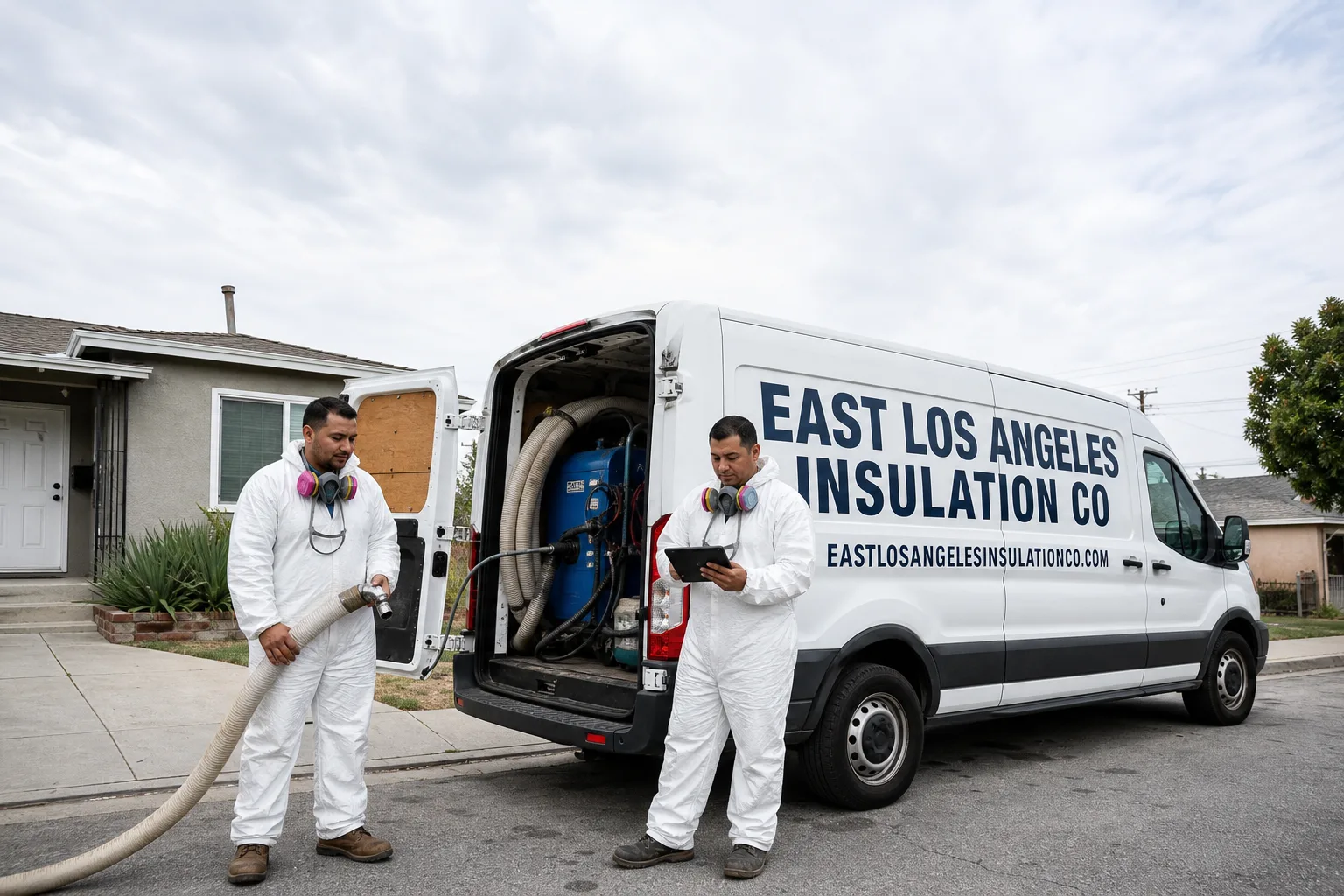
Blowing new insulation over compromised old material locks in moisture, odor, and rodent droppings. It also crushes the old layer, reducing its R-value further. In Koreatown attics with limited access, we use a commercial vacuum line that runs through a 24-inch hatch and pulls everything out without dragging debris through the living space.
Working around tenants and tight access
Most jobs in Koreatown happen in occupied buildings. We protect the unit below with floor coverings, run the vacuum hose through a window or hatch, and finish the removal in a single visit. If you manage a subdivided bungalow off 8th and need three attics done in one week, we sequence the work so tenants can stay put the whole time.
Trusted Brands We Service in Koreatown
We install insulation from eight manufacturers, and for Koreatown jobs we lean on a few for good reason. GreenFiber blown-in cellulose fits the shallow, irregular attics common in 1920s bungalows – it dense-packs into wall cavities and settles into odd framing without the waste you get cutting batts. Icynene open-cell spray foam air-seals and insulates in one pass, which matters when you’re sealing old window AC sleeves and knob-and-tube-era penetrations. Owens Corning fiberglass batts work where a clean cavity exists and the budget is tight. We keep all three on our trucks when we roll into 90005, so the material decision happens on site, not next week.
Common Attic Insulation Problems We See in Koreatown Homes
- West-facing walls baking through summer afternoons. The original 1920s cavities off Western and Normandie are often empty or filled with degraded knob-and-tube-era debris. Dense-packing the west wall changes the upstairs temperature within a day of finishing.
- Attic hatches the size of a filing cabinet drawer. Many Koreatown bungalows have no full stair to the attic – just a 24-inch closet hatch. Contractors without compact equipment walk away or do half the job. We bring the right rig.
- Old window AC sleeves leaking hot attic air. We see sleeves from the 1970s and 80s that were never sealed around the frame. Air-seal them before adding insulation, or you’re paying to insulate a sieve.
- Knob-and-tube wiring buried in wall cavities. Dense-packing a plaster wall with active knob-and-tube behind it is a fire hazard. We camera the cavity first. If we find live wiring, the work waits until an electrician clears it – no exceptions.
Pricing for Attic Insulation in Koreatown, CA
Here’s what a Koreatown homeowner can expect. Blown-in attic insulation for a typical 900 – 1,200 sq ft bungalow attic: $1,400 – $2,200. Adding an attic top-up over existing insulation: $800 – $1,400. Full attic insulation replacement including removal: $1,800 – $3,600. Dense-packing an exterior plaster wall: $2,500 – $4,600. Spray foam on a low-slope roof deck: $3,000 – $6,500. Factors that move the price: attic access size (a closet hatch slows the work), whether knob-and-tube wiring needs to be cleared, and how many tenant units need to be coordinated. Every estimate is free, and we give you a written quote before any work starts.
We Also Serve Cities Near Koreatown
While most of our days are spent in 90005, we also run jobs through Koreatown‘s neighboring areas. Los Angeles, Echo Park, Silver Lake, and Hollywood are all in our service area. Many of those neighborhoods share Koreatown’s older housing stock, so the same retrofit approach applies.
Serving Koreatown, CA - Our Local Coverage Area
We serve Koreatown and nearby communities. Use the map below to see the area we cover. If you’re nearby, we can almost certainly help.
FAQs About Attic Insulation in Koreatown
We use a remote camera to map the shallow cavity, then blow in GreenFiber cellulose through a 24-inch hatch using a compact hose system. On a 1926 bungalow subdivided into four rentals near Western and 8th, the west-facing attic had only a 24-inch closet hatch, so we mapped the cavity with a camera before dense-packing the west wall and adding a radiant barrier on the roof deck. The upstairs tenant told us the late-afternoon heat gain dropped noticeably. Call (866) 566-0304 to schedule a look at your specific attic.
Usually yes, if the old insulation is compacted, water-damaged, rodent-infested, or matted down from years of foot traffic in a tight attic. Adding new material on top locks in moisture and odor, and it lowers the effective R-value of the old layer. In Koreatown apartment buildings with multiple attics, we’ll assess each one and tell you which need full removal and which can take a top-up – never a blanket answer.
Yes, that’s the norm in Koreatown. We run the vacuum and blow hose through a window or closet hatch, protect floors and stairwells with coverings, and finish most jobs in a single day. No unit needs to be vacated. We’ve done dozens of occupied 90005 buildings, and the work is quiet enough that residents can stay in place.
We stock eight brands: Owens Corning, Johns Manville, Knauf, Rockwool, CertainTeed, Icynene, Demilec, and GreenFiber. For Koreatown’s tight, shallow attics and plaster walls, we most often recommend GreenFiber blown-in cellulose, Icynene spray foam for air-sealing, and Owens Corning batts where cavities are clean. The choice depends on your building, not on what we happen to have on the shelf.
Koreatown’s insulation problem is cooling, not heating. The LA basin gives us mild winters and hot, smoggy late-summer months, so the priority is reducing heat gain through west- and south-facing walls and roofs – not trapping heat inside. That’s why we often recommend radiant barriers and dense-packed walls here, not the thick ceiling batts that make sense in colder climates. Call (866) 566-0304 for an assessment tailored to your building’s orientation and window load.
Written by Ruben Acosta, Owner at East Los Angeles Insulation Co, serving Koreatown and the greater Los Angeles basin.