
Insulation Company in Corona, CA
Blown in insulation in Corona is the most direct fix for the two problems we hear about most: bedrooms that never cool down in August and energy bills that spike every summer. Most Corona homes built between the 1980s and early 2000s still carry their original attic insulation, and a lot of it has settled to half its rated depth. That means a roof that’s supposed to hold R-30 is often performing closer to R-15, while attic temperatures push past 140°F from June through September. We’re East Los Angeles Insulation Co, and we’ve served Corona since 2018. Call (866) 566-0304 for a free estimate.
Why Corona Homes Are Different
Corona sits at the junction of three distinct climate zones. The Cajon Pass corridor to the north funnels hot, dry air through the city. The inland basin floor holds heat and smog for days. And the Santa Ana River canyon near the mountains runs noticeably cooler, especially at night. Insulation specs that work in one part of Corona routinely fail in another – a tract home off Green River Road needs a different approach than a 1960s ranch near downtown.
The housing stock compounds the problem. Most of Corona’s homes were built during the rapid build-out from the 1980s through the 2000s. That means attics are now at or past the end of their service life. The typical setup is original R-19 or R-30 fiberglass batts on a low-pitch tile roof. After twenty to thirty years of Corona summers, those batts have settled, compressed, and lost a significant portion of their effective R-value. In the older pockets around 92879, ranch homes from the 1950s and 70s often have minimal wall insulation and uninsulated attached garages. The newer east-side developments in 92880 feature vaulted ceilings and rows of can lights – both of which create air-sealing problems that old insulation never accounted for.
We see the same pattern on job after job in the tract neighborhoods along the 91 corridor. Where HVAC contractors ran ducts and lines through the attic years ago, they moved the insulation aside – and it never went back. Homeowners call us thinking the AC is failing, but the real issue is bare, compressed patches directly above the master suite and garage.
Our Main Corona Services
Corona homeowners call us most often about two jobs: replacing failing attic insulation and upgrading to spray foam in homes with vaulted ceilings or hard-to-reach areas. Both are services we handle in-house with our own crews.
Attic Insulation in Corona
Attic insulation is the single highest-leverage upgrade for a Corona home. When attic temperatures exceed 140°F, the radiant heat pushing down through the ceiling becomes the dominant cooling load – not windows, not walls, not the AC itself. We do attic insulation as a dedicated diagnostic and installation service, not a quick add-on. That means we measure existing depth, find the settled and compressed patches, air-seal the bypasses, and then bring the entire attic up to a level that actually holds up to Corona summers. See the full breakdown on our Attic Insulation in Corona page.
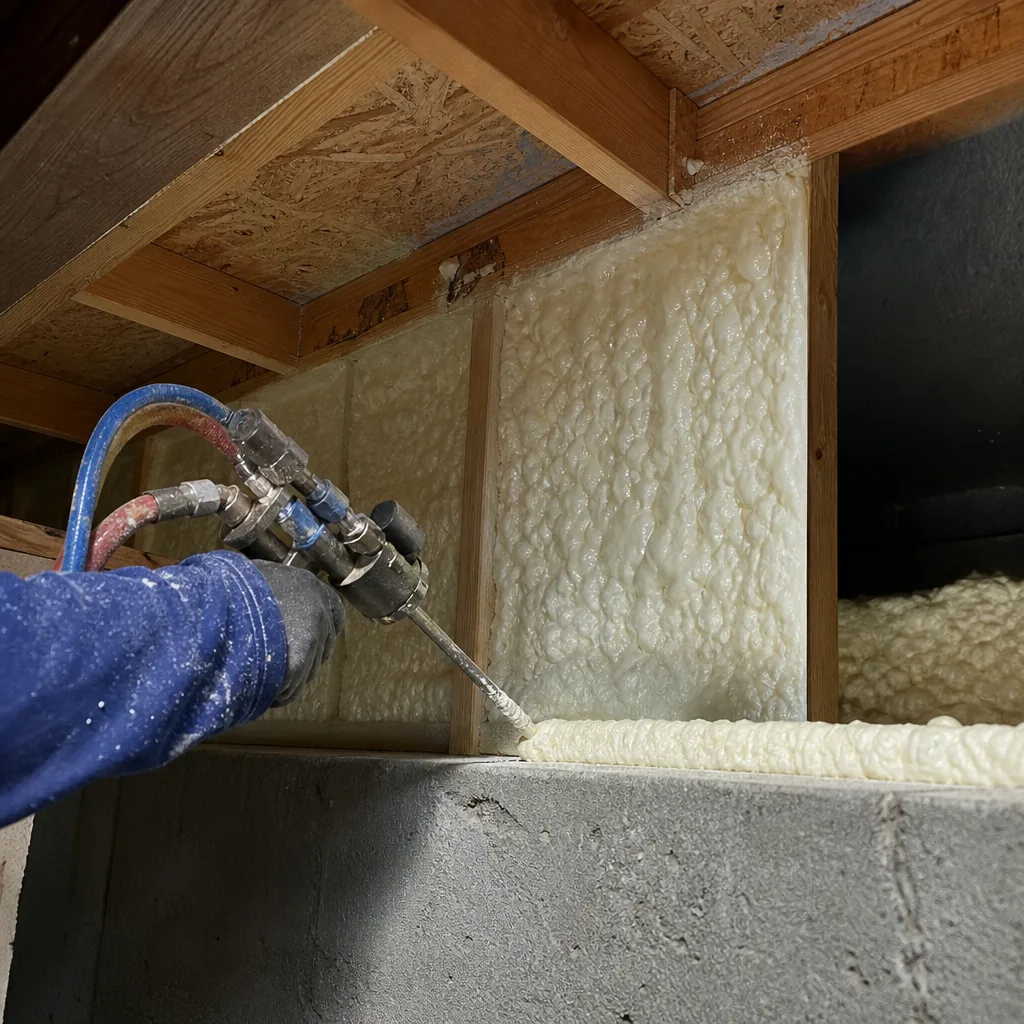
Spray Foam Insulation in Corona
Spray foam earns its keep in Corona on two types of homes: newer east-side two-stories with vaulted ceilings and can lights, and older ranch homes with uninsulated garages and wall cavities that batts can’t reach. Closed-cell foam also handles the Santa Ana wind problem better than anything else – it seals the attic bypasses that drive dust and hot air into the living space. We install open- and closed-cell foam using Demilec and Icynene products. Details on Spray Foam Insulation in Corona.
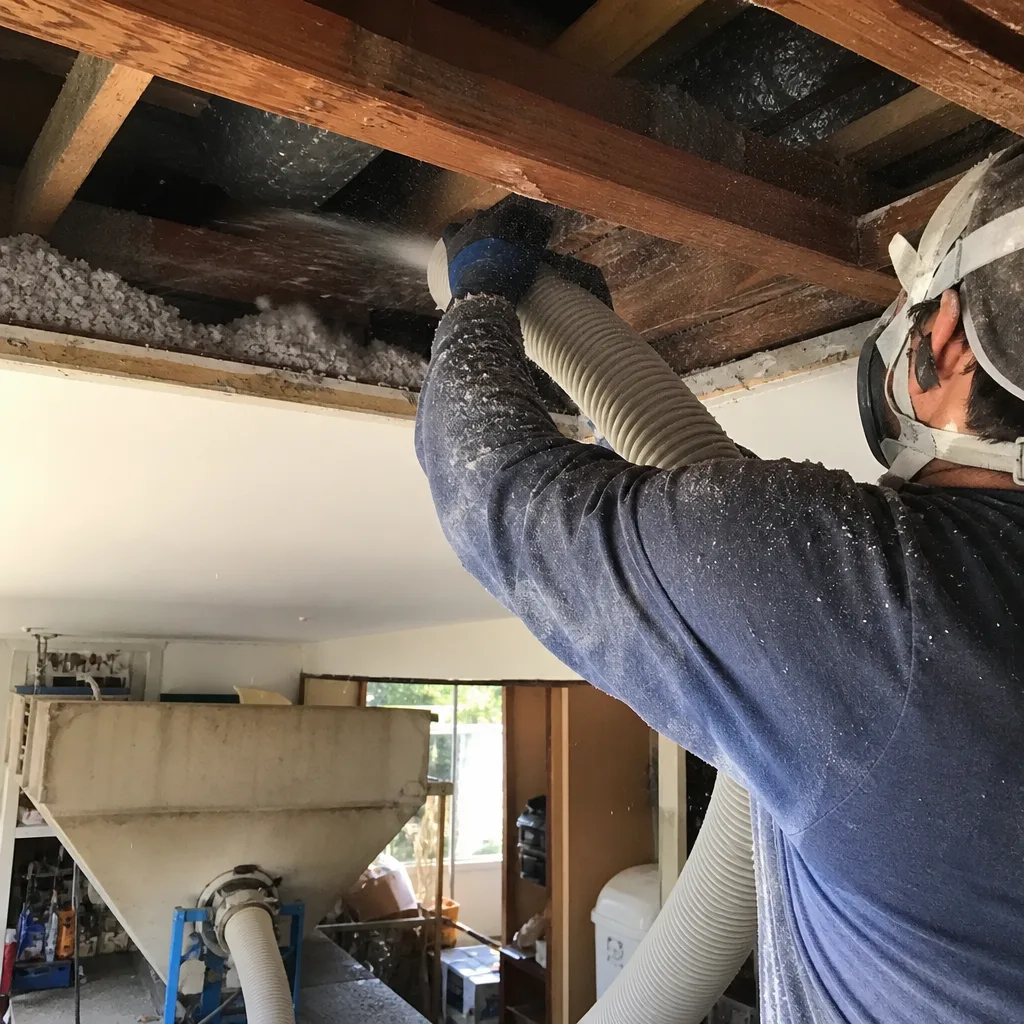
Blown In Insulation in Corona
Blown in insulation is the fastest, most cost-effective way to restore R-value across a Corona attic that has settled, shifted, or been disturbed by decades of HVAC work. In the tract homes along Green River Road and the 91 corridor, the original blown fiberglass has often settled to half its installed depth, and technicians who ran ductwork through those attics left bare, compressed patches above the garage and master suite. Blowing new insulation over and around that mess – after air sealing – gets the whole attic back to a consistent, measurable depth without tearing out drywall or rebuilding anything. To understand the full scope of what goes into the service, you can read more about Blown In Insulation as a core part of what we do.
Cellulose Insulation
Signs you need it
Your attic insulation looks thin and dusty, and rooms directly below the attic never hold temperature even when the AC runs constantly.
What it costs in Corona
In Corona, blown cellulose insulation typically runs $1.50 to $3.50 per square foot installed, depending on depth, access, and how much air sealing the attic needs first.
How we do it
We air-seal the attic bypasses, then blow GreenFiber cellulose to a consistent, measured depth across every bay and corner, including the areas old insulation never covered.
Blown In Attic Insulation
Signs you need it
Your attic has settled batts or patchy blown material, and you can feel heat radiating through the ceiling on summer afternoons.
What it costs in Corona
Blown in attic insulation in Corona generally falls between $1,200 and $3,800 for a typical 1,500 to 2,500 square foot home, depending on target R-value and attic condition.
How we do it
We remove or level what’s there, seal the bypasses and top plates, then blow fiberglass or cellulose to a uniform R-38 or R-49 depth with baffles protecting the soffit vents.
Blown In Fiberglass Insulation
Signs you need it
The existing attic insulation is compressed, dirty, or has been pushed aside by ductwork, leaving bare spots over the rooms that get hottest in summer.
What it costs in Corona
Blown in fiberglass insulation in Corona typically costs $1.20 to $3.00 per square foot installed, with the lower end for straightforward attics and the higher end for tight or obstructed ones.
How we do it
We run the blower hose to the attic, install vent baffles, and blow Owens Corning fiberglass to a consistent depth, checking coverage as we go so no bay gets shorted.
What Blown In Insulation Costs in Corona
| Item | Typical range in Corona |
|---|---|
| Blown cellulose insulation (per sq ft) | $1.50 – $3.50 |
| Blown fiberglass insulation (per sq ft) | $1.20 – $3.00 |
| Full attic blow-in (typical home) | $1,200 – $3,800 |
Is blown in insulation worth it in Corona?
For most Corona attics, yes. Restoring settled insulation from an effective R-15 to R-38 can cut summer cooling costs noticeably, and blown in material covers irregular bays and tight corners that batts can’t reach.
How long does blown in insulation last in Corona?
Fiberglass blown in insulation lasts indefinitely in a dry attic, though it settles over the first few years. Cellulose holds its depth longer once settled and performs well in Corona’s dry, hot climate. Both should be checked whenever ductwork or wiring is disturbed.
Brands We Service in Corona
We carry Demilec spray foam, GreenFiber cellulose, Owens Corning fiberglass, and Johns Manville products. That means we match the material to your attic, your budget, and how you use the house – not the other way around. See our brands for the full range we stock and install.
Pricing for Insulation Company in Corona, CA
| Service | Typical range in Corona |
|---|---|
| Blown cellulose insulation (per sq ft) | $1.50 – $3.50 |
| Blown fiberglass insulation (per sq ft) | $1.20 – $3.00 |
| Full attic blow-in (typical home) | $1,200 – $3,800 |
| Attic insulation upgrade (batt to R-38) | $1,800 – $4,500 |
| Spray foam attic (open-cell, per sq ft) | $2.00 – $4.00 |
| Spray foam attic (closed-cell, per sq ft) | $3.00 – $6.00 |
| Garage ceiling insulation | $800 – $2,200 |
| Whole-home air sealing (with insulation) | $600 – $1,800 |
What pushes a Corona job toward the higher end is usually attic access and prep work. Tight scuttle holes, low tile roofs, and attics full of old ductwork mean more time on site before any material goes in. We quote the full job upfront after inspecting the attic, and the number we give you is the number you pay – no surprises at the end.
Neighborhoods We Serve in Corona
We run crews across Corona every week, from the older tracts along the 91 corridor to the newer east-side developments. Most jobs in Corona get scheduled within five to seven business days, and emergency air-sealing or pre-summer insulation work can often be squeezed in faster.
- Green River Road corridor
- Downtown / Historic Corona (92879)
- Eastside developments (92880)
- Corona Hills
- Sierra del Oro
Service Area – Cities Near Corona
Our Corona crews also cover the surrounding cities on a regular rotation. If you’re in Home Gardens, CA, El Cerrito Corona, CA, Eastvale, CA, or Norco, CA, we can typically get to your job within a week and quote it free before any work begins.
Serving Corona, CA - Our Local Coverage Area
We serve Corona and nearby communities. Use the map below to see the area we cover. If you’re nearby, we can almost certainly help.
FAQs About Insulation Company in Corona
Most Corona estimates happen within two to four business days, and installations are usually scheduled within five to seven business days after that. During the spring rush before summer, we add extra crews to keep that timeline tight. Call (866) 566-0304 to get on the schedule.
Most attic and blown-in insulation work in Corona does not require a permit. If your project involves structural changes or new wall cavities, the city may ask for a building permit, and we’ll tell you before quoting so there are no surprises.
Yes. The 1950s to 70s ranch homes near downtown Corona often have little or no wall insulation and uninsulated garages. We assess what’s there, find the air leaks, and build up the attic insulation to current recommended levels before addressing walls or garage ceilings as budget allows.
What happens when you call
- 1A real person answersNo phone trees. Talk to a local insulation pro.
- 2You get an upfront price rangeHonest numbers before anyone is dispatched. No surprises.
- 3We come out and measureLicensed & insured, at a time that suits you. The visit and the quote are both free.
- 4You get the price in writingLine-itemed, yours to keep, and nothing starts until you say go.
What Corona Customers Say
"Handled the utility rebate paperwork, which knocked a real amount off the final cost."
- Rosa Martinez"Plastic laid from the front door to the attic hatch and they vacuumed the hallway afterward."
- Diego Castillo"He did a blower door test before and after and gave me the numbers. I like being able to see the difference rather than being told about it."
- Gilbert Herrera