
Insulation Company in San Marino, CA
Blown in insulation solves a problem we see constantly in San Marino: homes built between 1910 and 1960 with wood lath and plaster walls that make tearing out drywall to add batts a nonstarter. In this city of architecturally significant estates, the right answer is usually loose fill insulation installed through small access holes, which preserves original plaster and lath while adding real thermal performance. Hot San Gabriel Valley summers push attic temperatures past 140°F, and blown in insulation keeps that heat from migrating into living spaces below. Call (866) 566-0304 when you’re ready to talk through your options.
East Los Angeles Insulation Co has served San Marino since 2018. We’re a dedicated insulation contractor, which means every job we do is insulation – attic, spray foam, or blown in. No side work, no subcontracting the work out.
Why San Marino Homes Are Different
San Marino is not a tract-home city. The houses that line streets near Lacy Park and Huntington Drive are large 1910s through 1960s custom builds, many with plaster walls, irregular framing, and attic spaces that were never designed with modern insulation in mind. Some still have knob-and-tube wiring in the walls, which changes how we approach any wall cavity work. Others sit on raised foundations with unconditioned crawl spaces that add a separate thermal penalty. When we’re working in San Marino, we’re adapting every job to a house that was built by hand, not stamped out by a developer.
The climate shapes our recommendations too. San Marino’s inland foothill location means long, dry summers with attic temperatures that can exceed 140°F by mid-afternoon. Winters are cool but rarely freezing, so the insulation priority here is almost always radiant heat rejection and attic floor insulation rather than pipe-freeze protection. We also see a pattern unique to this area: mature coast live oaks overhang many roofs near the park and throughout the city, and their leaf litter clogs soffit vents and attic intake screens. That debris reduces ventilation, which makes the attic hotter, which makes the house hotter. Part of any attic job in San Marino is checking and clearing those vent paths so the insulation we install can actually do its job.
The other thing about San Marino is that permits and aesthetic rules are real. This is a city with an active design review process and a community that cares deeply about maintaining its architectural character. That means insulation work, especially anything that touches an exterior wall or roofline, needs to be done in a way that does not alter the look of the house. Blown in insulation is ideal for this because we access wall cavities through small, discreet openings that are patched and painted to disappear.
Our Main San Marino Services
Most San Marino homeowners call us about two things: their attic and their wall cavities. Here’s how we approach each.
Attic Insulation in San Marino
Attic work in San Marino usually means adding loose fill or batts over an existing layer that’s compacted down to nothing, or air-sealing an attic floor that’s leaking conditioned air through every light fixture and top plate. Because so many homes here have low-slope or complex rooflines with multiple gables and valleys, we measure and map the attic before we quote, rather than estimating from the street. The oak debris issue is real, so we include vent inspection in our attic walkthroughs. See Attic Insulation in San Marino for the full breakdown.
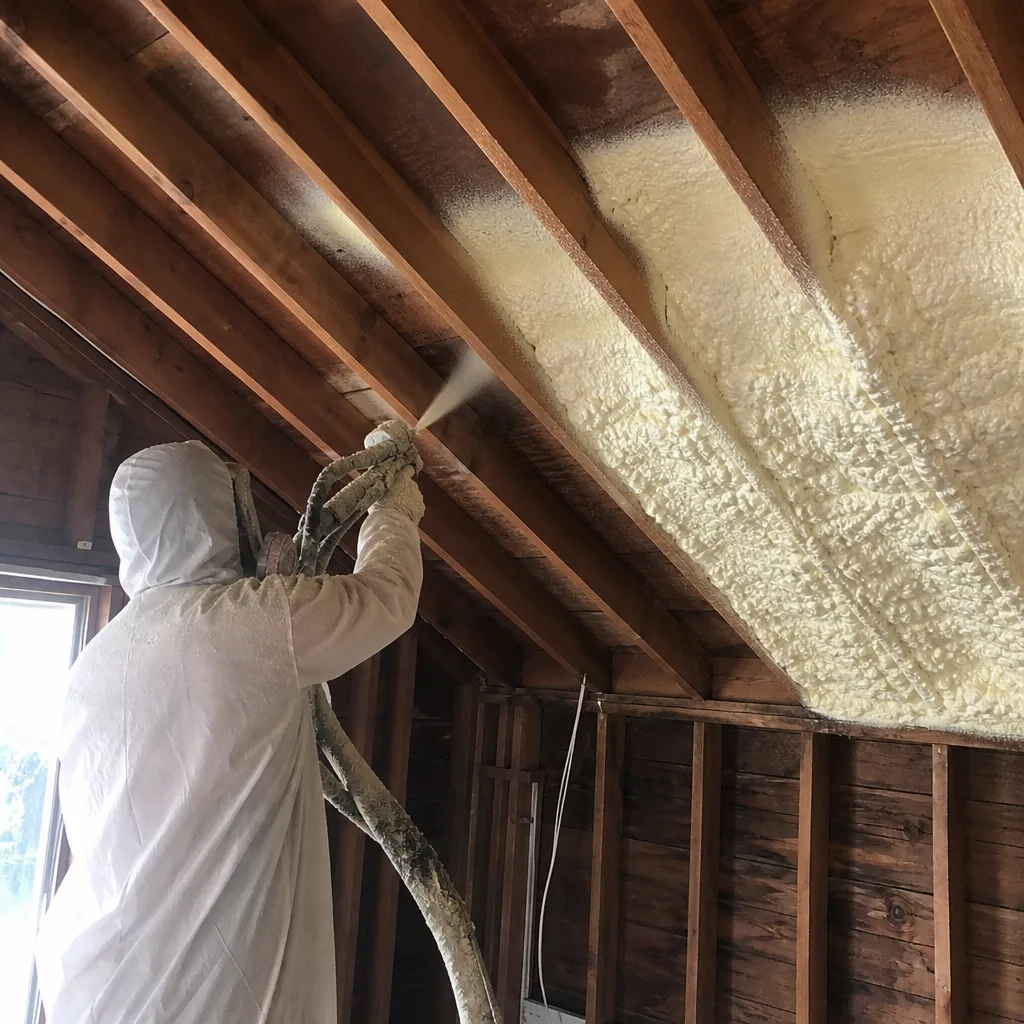
Spray Foam Insulation in San Marino
Spray foam makes sense in San Marino when the homeowner wants to convert a vented attic to a conditioned space, or when there’s a room with no attic access and the only way to insulate the roofline is from below. We install open-cell and closed-cell foam, using Icynene and Demilec products. Closed-cell foam is the better fit for most San Marino applications because it adds structural rigidity and acts as its own air and vapor barrier, which matters in a house with irregular framing and gaps that batts can’t bridge. Read Spray Foam Insulation in San Marino for product details and cost.
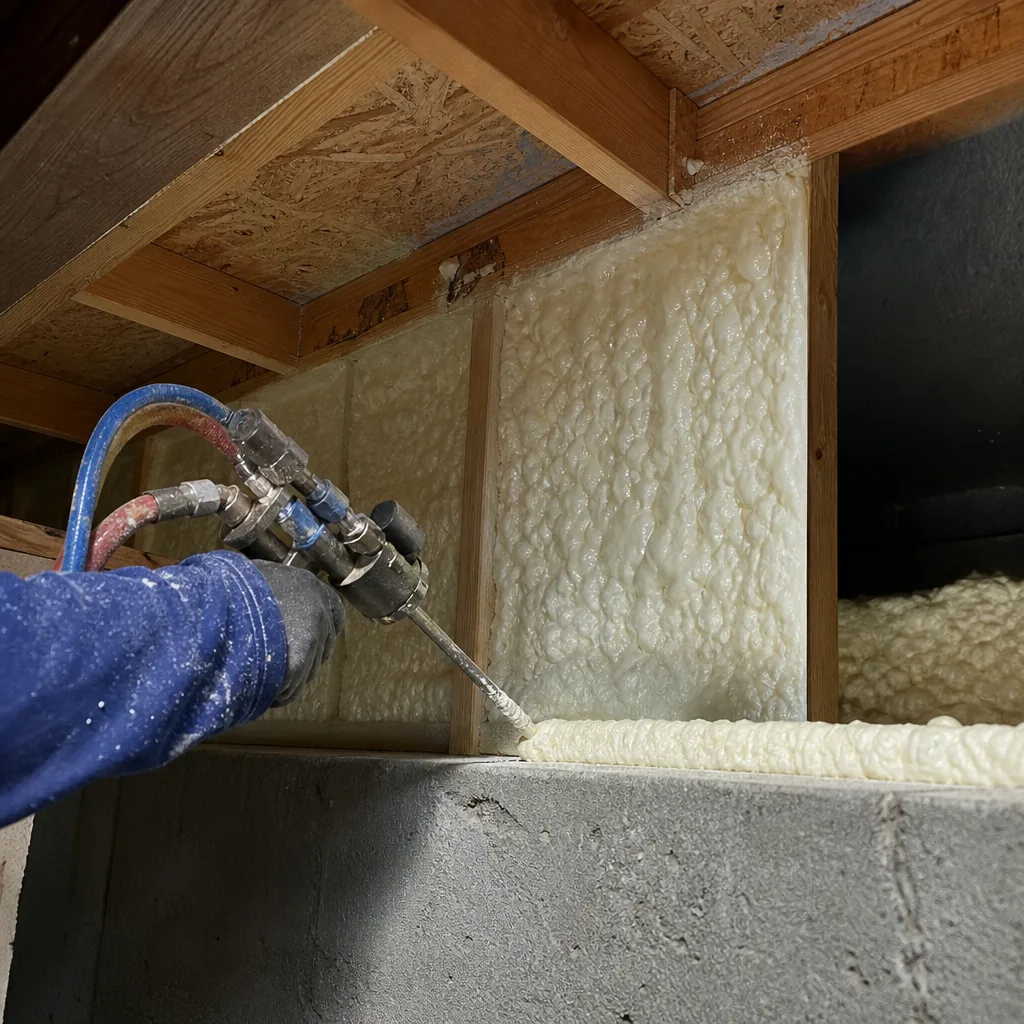
Blown In Insulation in San Marino
Blown in insulation is the quiet workhorse of San Marino home retrofits. For houses with plaster and lath walls, it’s often the only practical way to add wall insulation without gutting original interiors. For attics, it’s the fastest way to bring an under-insulated 1920s or 1950s home up to a modern R-value. We blow in GreenFiber cellulose or loose fiberglass through small holes, then patch and paint those holes so the work vanishes into the original wall surface. If you want to understand the full scope of what Blown In Insulation involves, start there.
Cellulose Insulation
Signs you need it
Rooms that stay hot in summer despite running the AC, plus walls that feel warm to the touch in late afternoon, are strong indicators your wall cavities are empty or settled.
What it costs in San Marino
Dense-packed cellulose for an existing wall cavity runs $2.10 to $4.00 per square foot in San Marino; full-home blown-in attic cellulose typically lands between $1.20 and $2.30 per square foot.
How we do it
We drill small access holes into each stud bay, dense-pack the cavity with dry cellulose at pressure, then patch and paint the holes to match the surrounding wall.
Blown In Attic Insulation
Signs you need it
An attic floor with old, thin, or compressed insulation, or upstairs ceilings that radiate heat by 4 p.m., mean the attic is not holding back the San Marino sun.
What it costs in San Marino
Blown in attic insulation runs $1.20 to $2.30 per square foot for attic floor coverage in San Marino, depending on target depth and existing material that needs removal.
How we do it
We clear any old or rodent-damaged material, air-seal the attic floor penetrations, then blow fresh insulation to the depth required to meet your target R-value.
Loose Fill Insulation
Signs you need it
Irregular joist spacing, shallow bays, or attic floors cluttered with plumbing and wiring make rigid batts a poor fit; loose fill conforms around every obstacle.
What it costs in San Marino
Loose fill fiberglass or cellulose runs $1.20 to $2.30 per square foot for attic applications and $2.10 to $4.00 per square foot for dense-packed wall work in San Marino.
How we do it
We use a calibrated blowing machine to lay an even, consistent blanket of loose fill to the exact depth specified for your roof and framing type.
What Blown In Insulation Costs in San Marino
| Item | Typical range in San Marino |
|---|---|
| Blown in attic insulation | $1.20 – $2.30 per sq ft |
| Dense-packed wall cellulose | $2.10 – $4.00 per sq ft |
| Loose fill fiberglass (attic) | $1.20 – $2.30 per sq ft |
Those numbers cover labor and materials. What pushes the final price higher in San Marino is access: attics with multiple gables, low clearance, or the need to remove old insulation first all add time. Older homes also tend to have more air-sealing work at the attic floor, which we quote after the walkthrough.
Can you insulate walls without tearing out the plaster?
Yes. Dense-packed blown in insulation goes through small drilled holes into each stud cavity, then we patch and paint the holes. The original plaster, lath, and trim stay intact, which is why it’s the preferred method in San Marino’s older homes.
How long does blown in insulation take in San Marino?
Most attic-only jobs finish in one day. A full wall dense-pack on a large estate can take two days, mostly due to the careful patching and paint matching. Call (866) 566-0304 for a schedule estimate on your house.
Brands We Service in San Marino
We stock and install GreenFiber recycled-content cellulose, CertainTeed and Johns Manville loose fill fiberglass, Icynene open-cell foam, and Demilec closed-cell foam. Parts and material arrive with the crew, never drop-shipped to the curb. Learn more about our brands.
Pricing for Insulation Company in San Marino, CA
| Service | Typical range in San Marino |
|---|---|
| Blown in attic insulation | $1.20 – $2.30 per sq ft |
| Dense-packed wall insulation | $2.10 – $4.00 per sq ft |
| Loose fill insulation (attic, installed) | $1.20 – $2.30 per sq ft |
| Attic air sealing (as part of attic job) | Quoted after inspection |
| Spray foam insulation – open cell | $0.90 – $2.40 per board ft |
| Spray foam insulation – closed cell | $1.40 – $3.60 per board ft |
| Insulation removal (old or damaged) | Quoted after inspection |
| Batt insulation (fiberglass, walls) | $0.80 – $1.90 per sq ft of wall |
| Batt insulation (fiberglass, attic) | $0.35 – $0.80 per sq ft of coverage |
| Mineral wool batts (Rockwool) | $1.40 – $2.60 per sq ft of wall |
What pushes cost up in San Marino is older construction: irregular stud spacing, lath and plaster repairs after wall work, and attic access that requires scaffolding or long hose runs. We give you a written price before any work starts, and that price doesn’t move unless the scope does.
Neighborhoods We Serve in San Marino
We work throughout San Marino and know the housing patterns in its distinct pockets. The estate district around Lacy Park tends to have the oldest and most architecturally sensitive homes, while streets south of Huntington Drive mix 1940s and 1950s custom builds with more regular framing. ZIP codes 91108 and 91118 cover the entire city, and we typically schedule estimates within a few days of your call.
- Lacy Park estates
- Huntington Drive corridor
- San Marino Square area
- Virgil Middle School district area
- Valentine and Winston neighborhoods
Service Area – Cities Near San Marino
Our crews cover San Marino and the surrounding San Gabriel Valley communities. We regularly work in San Gabriel, CA, where older tract homes and early custom builds need similar retrofitting. East San Gabriel, CA homes, with their 1950s and 1960s construction, have attics that benefit from the same blown in approach. In Alhambra, CA, the denser housing stock and smaller attics change the access equation. And East Pasadena, CA shares San Marino’s climate and era of construction, so the work carries over cleanly.
Serving San Marino, CA - Our Local Coverage Area
We serve San Marino and nearby communities. Use the map below to see the area we cover. If you’re nearby, we can almost certainly help.
FAQs About Insulation Company in San Marino
Most re-insulation work, like blowing attic insulation or dense-packing existing wall cavities, does not require a permit in San Marino. If the scope involves structural changes or converting vented attic space to conditioned space with spray foam, the city’s design review process may apply. Call (866) 566-0304 and we’ll tell you what the city requires for your specific project.
We schedule estimates in San Marino within a few days of your call, and most installation jobs are booked within one to two weeks after the quote is accepted. Attic-only blown in work is often a one-day job. For time-sensitive situations, call (866) 566-0304 and ask about our current availability.
Yes. If your San Marino attic has old, settled, rodent-damaged, or vermiculite-containing insulation, we assess and quote removal as part of the job before installing new material. We’ll tell you exactly what’s in your attic during the free estimate, and the price includes proper disposal.
What happens when you call
- 1A real person answersNo phone trees. Talk to a local insulation pro.
- 2You get an upfront price rangeHonest numbers before anyone is dispatched. No surprises.
- 3We come out and measureLicensed & insured, at a time that suits you. The visit and the quote are both free.
- 4You get the price in writingLine-itemed, yours to keep, and nothing starts until you say go.
What San Marino Customers Say
"Plastic laid from the front door to the attic hatch and they vacuumed the hallway afterward."
- Diego Castillo"He did a blower door test before and after and gave me the numbers. I like being able to see the difference rather than being told about it."
- Gilbert Herrera"Attic was at maybe R-11 from the 1970s and blown in over the top would have just buried the problem. They removed the old material, air sealed the top plates and penetrations first, then blew in to R-49. The upstairs is a completely different house in August."
- Jason Walsh