
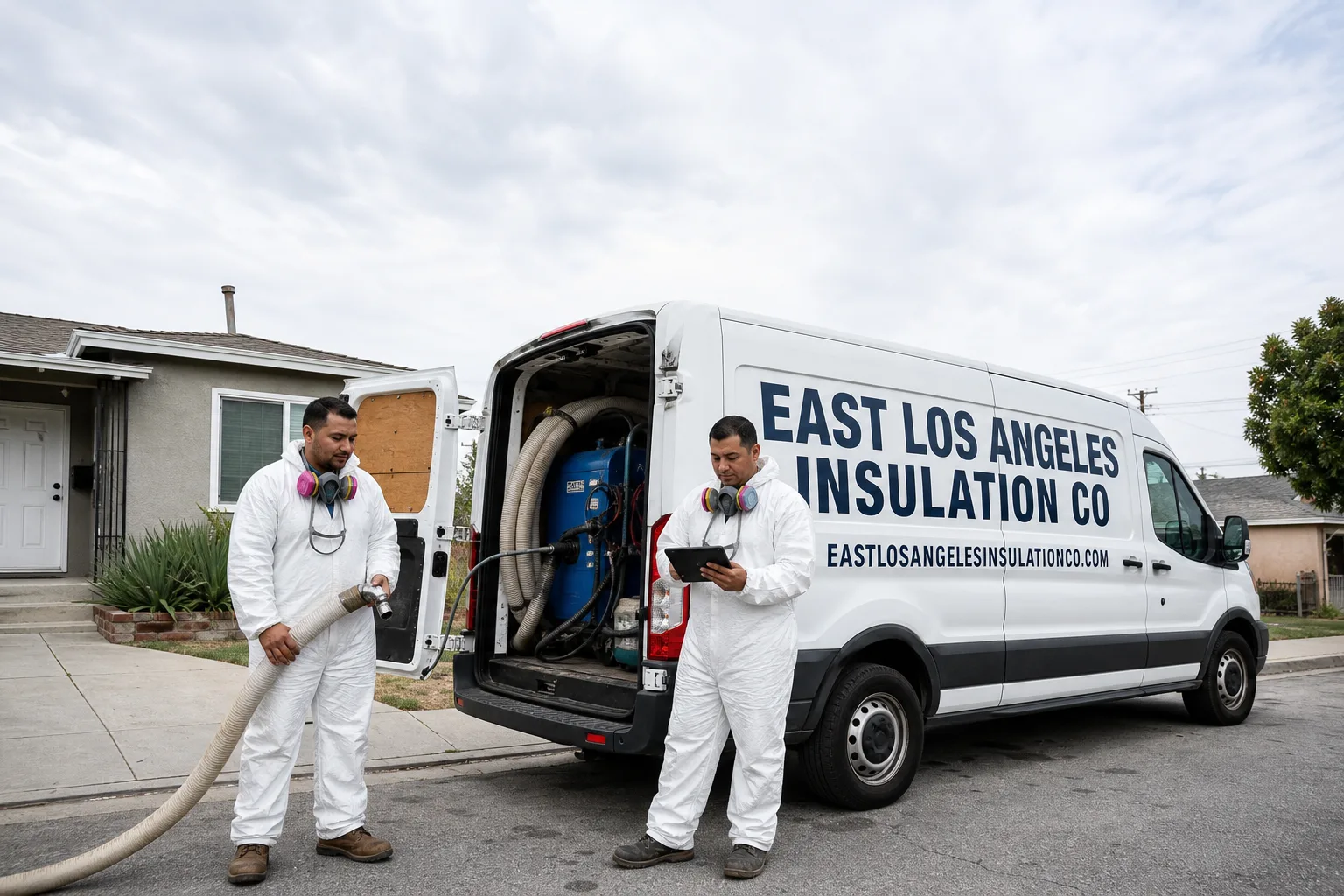
Fast, Reliable Spray Foam Insulation Across Culver City
Spray foam insulation in Culver City typically costs $3.50 to $7.50 per board foot for open-cell and $5.50 to $11.00 per board foot for closed-cell, with most whole-attic jobs landing between $4,800 and $14,000 depending on square footage and air sealing scope. We’re East Los Angeles Insulation Co, and we’ve been spraying foam in Culver City homes for years, from Carlson Park bungalows to newer infill construction along Washington Boulevard. If you’re dealing with uneven room temperatures, a fog-dampened attic, or energy bills that climb every summer, call (866) 566-0304 for a free estimate. A real insulation specialist, not a general contractor, will show up.
Why East Los Angeles Insulation Co Is Culver City’s Preferred Spray Foam Insulation Company
Culver City homeowners call us because we stock eight spray foam and insulation brands, including Icynene, Demilec, and Reflectix service in Culver City, and we actually know how each one performs in a marine-layer climate. Most insulation crews in this area carry one or two products. We carry options and match them to your house. That matters here, where 1920s Spanish Colonial Revival homes with knob-and-tube wiring sit three blocks from 2019-era infill townhomes built under the city’s solar mandate. Both need spray foam. Neither needs the same approach.
Our response time to Culver City is same-week for most projects, and we coordinate directly with solar installers when your Title 24 cool roof or radiant barrier package needs to align with the foam work. Ruben Acosta, our owner, personally reviews every Culver City job spec before we send a crew out. We’re not a franchise. We’re not a handyman service that also does insulation. We’re a dedicated insulation contractor, and Culver City is one of the main areas we serve alongside Ladera Heights, Century City, Venice, and Beverly Hills. For more on how we approach the whole city, see Spray Foam Insulation in Culver City.
Open Cell Spray Foam in Culver City
Open Cell Spray Foam is one of the most common requests we field from Culver City homeowners, especially in the Sunkist Park and Carlson Park neighborhoods where 1940s tract homes have attics stuffed with settled cellulose that’s now doing almost nothing. Open-cell foam expands up to 100 times its liquid volume, fills every cavity, and creates a continuous air seal that stops the marine-layer fog from leaking into your attic. For a typical 1,200-square-foot bungalow, an open-cell attic job in Culver City runs $5,200 to $9,500. It’s the right product when you want air sealing plus solid thermal performance without the higher cost of closed-cell.
Attic air sealing in older bungalows
Open-cell foam does more than insulate. It seals the dozens of small gaps around recessed lights, vent pipes, and top plates that let air move between your living space and the attic. In Culver City’s 1920s through 1950s homes, those gaps are everywhere. Sealing them before adding foam is the difference between an insulation job that works and one that just looks good in photos.
Coordination with Title 24 solar packages
If your home has solar or you’re planning to add panels, open-cell foam needs to be sequenced with the roof work. The city’s green building rules cross-reference attic insulation, radiant barriers, and cool roof coatings. We handle that coordination so your HERS inspection passes the first time, not the third.
Spray Foam Insulation Contractors in Culver City
Spray Foam Insulation Contractors in Culver City are not all the same, and if you’ve only been quoted by one company, you’re missing half the picture. The right contractor needs to understand the city’s historic preservation rules, the 2019 electrification ordinance, and how coastal fog changes what a foam product can and can’t do. Our team, led by Ruben Acosta, has worked inside the Helms Bakery district, the downtown infill buildings, and dozens of prewar homes across 90230, 90231, 90232, and 90233. We’re state-licensed and insured, and we only do insulation, three methods: attic, spray foam, and blown-in.
Historic district applications
In the Helms Bakery and downtown districts, exterior foam board is often restricted. The street-facing facade can’t change. So we spray foam from the interior side of the attic and walls, keeping the foam completely invisible from the street while still hitting the R-value the city wants. Most general insulation crews don’t know how to do that without running afoul of preservation rules.
Knob-and-tube safety separation
Older Culver City homes still have active knob-and-tube circuits in attic spaces. Spray foam can’t be applied over or around those wires. The foam traps heat and creates a fire risk. We identify those circuits before we quote, mark them for an electrician, and adjust the foam plan around them. That’s not an upsell. That’s code-compliance and basic safety.
Trusted Brands We Service in Culver City
We install Spray Foam Insulation using brands we trust, not whatever a distributor happens to have on the truck this week. Our Culver City jobs most often use Icynene open-cell for attics and Demilec closed-cell for rim joists and garage ceilings. We also stock Owens Corning and GreenFiber options for homeowners who want a recycled-content or budget-conscious alternative. Because we run our own local inventory, we can typically start a Culver City project within five to seven business days of the estimate, even during the fall prepping season when other contractors are booked out for a month or more.
Common Spray Foam Insulation Problems We See in Culver City Homes
- Builder-grade gaps in newer infill construction. Garage ceilings and attic hatches in new townhomes along Washington Boulevard often have gaps left by the builder. The marine layer pushes fog through those gaps, and foam can’t perform if the air seal isn’t fixed first.
- Settled cellulose in 1940s tract homes. In Carlson Park and Sunkist Park, original blown-in insulation compresses over decades. By the time we open the attic, it’s often down to R-8 or R-10. Foam retrofit restores the thermal barrier and air-tightness in one pass.
- Knob-and-tube wiring conflicts. Any pre-1950 bungalow in 90230 or 90232 may still have live knob-and-tube circuits. Foam must be kept away from those wires, which changes the spray pattern and the material spec.
- Solar panel sequencing mistakes. We’ve seen foam installed after solar, only to fail inspection because the roof deck foam conflicted with the radiant barrier. The city’s Title 24 requirements make sequencing non-negotiable. We coordinate before the first truck shows up.
Pricing for Spray Foam Insulation in Culver City, CA
Here are real numbers for the Culver City market, not national averages you’ll find on a generic insulation website. Open-cell attics run $1.80 to $3.10 per board foot installed, closed-cell rim joists $5.50 to $8.50 per board foot, and full garage ceiling sprays $2,800 to $6,200 for a typical two-car garage. A complete open-cell attic in a 1,400-square-foot bungalow, including air sealing, lands between $6,000 and $11,000 depending on access and how much demo is required around old wiring. The biggest cost swing is knob-and-tube separation, which adds electrician time. We give written, itemized quotes before any work starts, and our estimates are free. Call (866) 566-0304 to schedule yours.
We Also Serve Cities Near Culver City
We work throughout the westside and South Bay. Beyond Culver City, our crews regularly handle spray foam projects in Ladera Heights, Century City, Venice, and Beverly Hills. If you’re in one of those areas and need a specialist who understands coastal fog, old wiring, and green building codes, we’re a short drive away. Our full service area is outlined on our Culver City page, but the short version is: if you’re west of the 405 and south of the 10, we likely cover you.
Serving Culver City, CA - Our Local Coverage Area
We serve Culver City and nearby communities. Use the map below to see the area we cover. If you’re nearby, we can almost certainly help.
FAQs About Spray Foam Insulation in Culver City
Yes. Culver City’s 2019 ordinance requiring solar and electrification on new construction ties attic insulation, cool roof, and radiant barrier specs together under Title 24. If spray foam goes in without coordinating the roof deck and radiant barrier sequencing, the solar inspection often fails. We coordinate with your solar installer before we spray so the whole package passes the first time. Call (866) 566-0304 and we’ll walk you through the timeline.
Yes, but only when it’s applied from the interior and kept invisible from the street. Exterior foam board is generally restricted under preservation guidelines. We spray inside the attic and wall cavities, which achieves the R-value without altering the street-facing elevation. If you own a historic property in the Helms Bakery district or downtown, call us for a site assessment.
The marine layer pushes cool, damp air into attics through gaps around vents, hatches, and recessed lights. If the air seal isn’t addressed first, foam underperforms because moisture keeps cycling through the envelope. Open-cell foam is especially good here because it seals those leak points while still allowing the attic to dry. We always inspect the air seal before we quote.
Spray foam cannot touch active knob-and-tube wiring. The foam insulates the wires, trapping heat and creating a fire hazard. We identify those circuits during the estimate, mark them for separation by a licensed electrician, and adjust the foam plan accordingly. If we spot it, we flag it. If another contractor misses it, that’s a red flag.
Most new infill construction along Washington Boulevard includes a builder-grade garage door with no insulation and weak perimeter seals. That lets marine fog into the garage and attic, undercutting your home’s thermal performance. We upgrade the garage ceiling with spray foam and recommend door seal improvements. For a specific quote on your garage, call (866) 566-0304.
Written by Ruben Acosta, Owner at East Los Angeles Insulation Co, serving Culver City and the surrounding westside communities with dedicated spray foam, attic, and blown-in insulation work.