
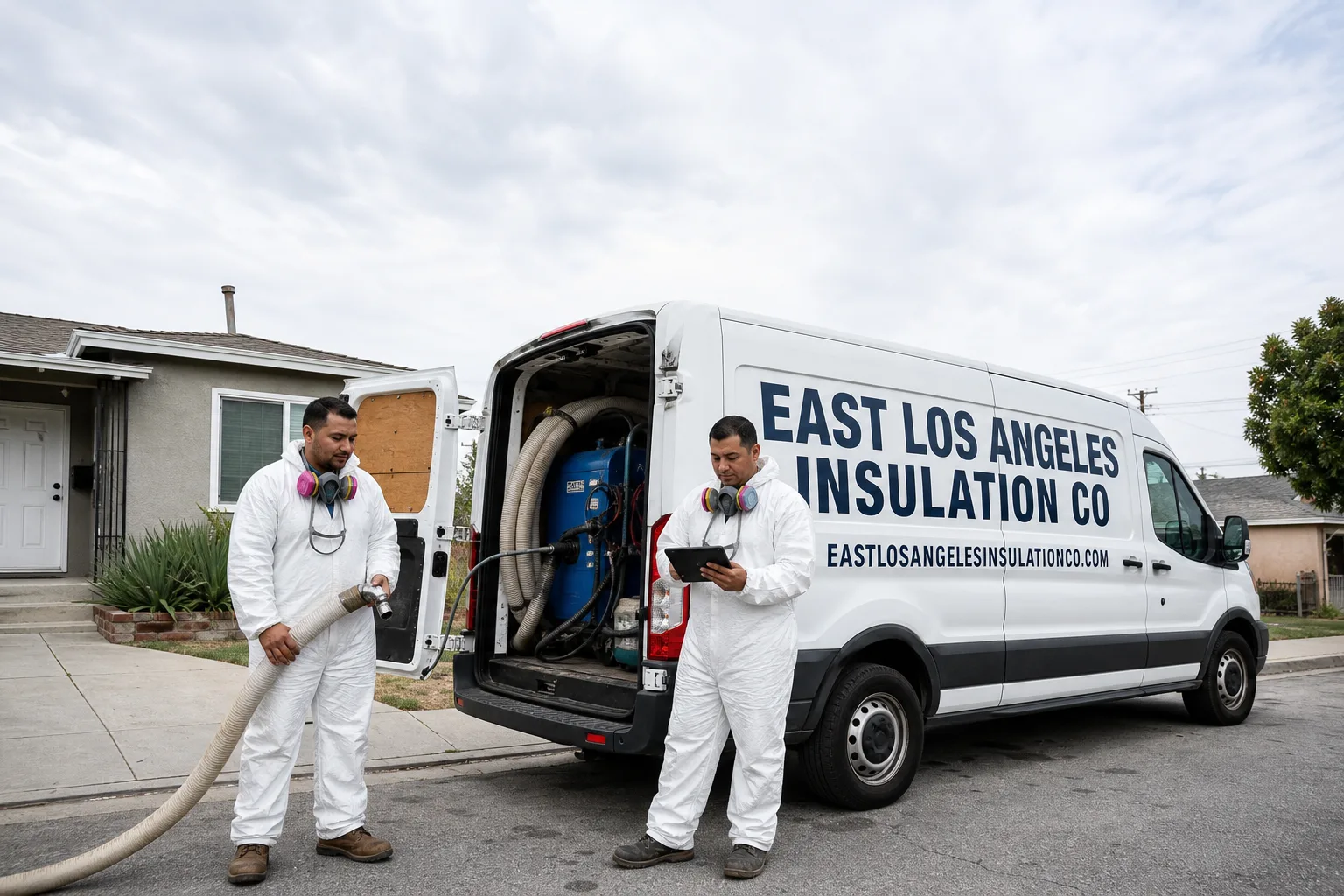
Fast, Reliable Spray Foam Insulation Across San Joaquin Hills
Spray foam insulation in San Joaquin Hills isn’t a one-size-fits-all job, and the homes tucked into these canyon ridges prove it every week. Closed-cell foam applied to west-facing walls and rim joists typically runs $2.50 to $4.50 per board foot installed, while open-cell lands between $1.20 and $2.10. We respond to calls across 92657 within 24 hours, and our team knows exactly what coastal moisture and Santa Ana wind do to insulation on these slopes. That’s the difference between a contractor who guesses and one who works here. Call (866) 566-0304 for a free estimate from Ruben Acosta’s crew.
Most insulation crews see a stucco wall and spray. We see wind-driven rain slamming the west face of a canyon-edge home, marine-layer humidity sitting in wall cavities for 300 days a year, and batts that sagged out of place five years after install. Our Spray Foam Insulation team specializes in what actually fails here, and we stock the products that hold up: Icynene and Demilec closed-cell foam, both built for exactly this environment.
Why East Los Angeles Insulation Co Is San Joaquin Hills’s Preferred Spray Foam Insulation Company
We’re a dedicated insulation contractor, not a generalist trying to juggle plumbing and drywall alongside foam work. Homeowners across San Joaquin Hills call us because they want someone who only thinks about thermal barriers, air sealing, and moisture management. That focus means our techs recognize failure patterns specific to this community: foam delaminating from west-facing sheathing, rim joists spongy from trapped condensation, cantilevered sections leaking air during Santa Ana events.
Our standard Reflectix service in San Joaquin Hills offers next-day response for most jobs, and we schedule free estimates within 48 hours. When you call, you’re not routed through a call center. You reach our team, and Ruben Acosta personally reviews the larger projects. We don’t subcontract spray foam work. The same crew that quotes the job is the crew on the ladder, and the phone number you call reaches the people doing the work.
We carry eight brands, but for San Joaquin Hills we lean heavily on two: Icynene and Demilec. Both manufacture closed-cell foams with the compressive strength and moisture resistance these coastal canyon homes demand. If open-cell is the right call for an interior sound-deadening application, we’ll tell you. If not, we’ll say so and show you why.
Spray Foam Wall Insulation in San Joaquin Hills
Spray foam wall insulation in San Joaquin Hills is the single most important upgrade for homes sitting on exposed ridgelines or canyon edges, because west- and north-facing walls take the full force of Santa Ana-driven rain while marine-layer humidity keeps those same cavities damp for most of the year. The job involves removing failed batt insulation, inspecting the sheathing for moisture damage, and applying closed-cell foam directly against the substrate to create an air, vapor, and thermal barrier in one pass. For a typical 1990s wood-frame home in San Joaquin Hills, expect wall cavity work to run $2.80 to $4.20 per board foot depending on cavity depth and access.
Closed-Cell for Wind-Washed Walls
Wind-washing through exposed wall cavities is the primary reason canyon-edge homes in San Joaquin Hills develop hot spots and drafts. Closed-cell foam at 2 inches creates a continuous air barrier that fiberglass can’t match, because fiberglass depends on still air inside the cavity to insulate. When Santa Ana winds push air behind stucco, closed-cell foam stays bonded to the sheathing and blocks that airflow completely.
Open-Cell for Interior Applications
Open-cell foam has a role here, but not on exterior walls facing the ocean breeze. We recommend it for interior partition walls and sound control between living spaces, where moisture exposure is minimal and the cost savings over closed-cell make sense. In San Joaquin Hills, open-cell runs $1.20 to $2.00 per board foot and delivers an R-value around 3.5 per inch with good noise dampening.
Rim Joist Spray Foam in San Joaquin Hills
Rim joist spray foam in San Joaquin Hills addresses one of the most overlooked air leaks in hillside construction: the band board where floor framing meets the foundation. On homes built into slopes, the rim joist on the downhill side is often exposed to wind-driven rain and trapped moisture, and fiberglass stuffed into those bays rots or sags within a decade. Sealing and insulating these cavities with closed-cell foam typically costs $1,400 to $3,200 for a 2,000-square-foot home in San Joaquin Hills, depending on accessibility and the number of penetrations.
Moisture-Tolerant Rim Sealing
Closed-cell foam is the right product for rim joists here because it doesn’t wick moisture and it won’t collapse when condensation forms against the band board. Marine-layer humidity keeps rim joist cavities damp even in summer, and open-cell foam in that environment becomes a sponge. We see this in homes along Ridge Route and Ocean Ridge, where original construction left rim joists uninsulated and the floor above the crawlspace runs 8 to 10 degrees colder than the rest of the house.
Sealing Cantilevered Bays
Many San Joaquin Hills homes have cantilevered sections extending over slopes, and those overhangs are notoriously difficult to insulate from below. Spray foam reaches where batts can’t, filling every irregular corner and band joist pocket in one application. In these areas, we typically use Demilec closed-cell foam for its adhesion and quick cure time, then verify coverage with a thermal camera before closing the cavity.
Trusted Brands We Service in San Joaquin Hills
We stock Icynene and Demilec closed-cell foam for San Joaquin Hills jobs because these two brands have proven field performance in coastal environments, and we keep local inventory so turnaround stays fast. For homeowners exploring eco-conscious options, GreenFiber blown-in insulation offers recycled content and low-VOC installation, which pairs well in attic spaces above the foam-sealed building envelope. Owens Corning products round out our batt and blown-in offerings for interior applications. We don’t push whichever brand we happen to have on the truck. We match the product to your home’s specific exposure and construction type.
Common Spray Foam Insulation Problems We See in San Joaquin Hills Homes
- Sagged batt insulation in west-facing walls. Years of wind-driven rain and marine humidity cause fiberglass batts to slump and pull away from the sheathing, leaving uninsulated air gaps exactly where heat gain and heat loss are worst. This is the number-one failure we correct in San Joaquin Hills, especially on homes built in the 1980s and 1990s along canyon rims.
- Delaminated open-cell foam behind stucco. Open-cell foam installed on exterior walls in this climate absorbs moisture and loses its bond to the substrate over time. We see this most often on north- and west-facing walls where the marine layer sits longest.
- Moisture trapped in cantilevered sections. Santa Ana rains drive water into overhangs above slopes, and without closed-cell foam sealing the band joist, that moisture migrates into floor framing and eventually shows up as musty odors or softened subflooring.
- Corroded fasteners and substrate loss. Salt air accelerates corrosion on metal fasteners and hangers in rim joists and wall cavities. When we remove old insulation, we often find rusted fasteners that have expanded and cracked the surrounding wood, compromising the structural connection long before the homeowner sees any visible issue.
Pricing for Spray Foam Insulation in San Joaquin Hills, CA
What you’ll pay depends on application, foam type, and access, but clear ranges help you plan. Closed-cell wall insulation in San Joaquin Hills runs $2.50 to $4.50 per board foot installed. Rim joist sealing and insulation typically lands between $1,400 and $3,200 for an average two-story home. Garage ceiling spray foam under a living space usually falls between $1,800 and $3,800. Open-cell foam for interior walls and sound control is the budget option at $1.20 to $2.10 per board foot. Steep slopes, complex roof lines, and hard-to-reach cantilevered sections push costs toward the higher end. We offer free estimates for every job, and Ruben Acosta walks through the numbers with you before any work starts. Call (866) 566-0304 to schedule a walkthrough.
We Also Serve Cities Near San Joaquin Hills
Our crews work throughout the coastal canyon corridor, including Aliso Viejo, Newport Beach, Laguna Beach, and Irvine. If you’re in any of these neighboring communities and dealing with the same marine-moisture and wind-driven rain issues you find in San Joaquin Hills, we’ll bring the same closed-cell expertise to your project.
Serving San Joaquin Hills, CA - Our Local Coverage Area
We serve San Joaquin Hills and nearby communities. Use the map below to see the area we cover. If you’re nearby, we can almost certainly help.
FAQs About Spray Foam Insulation in San Joaquin Hills
Spray foam fails faster here because marine-layer humidity and Santa Ana wind-driven rain attack west- and north-facing walls with moisture levels inland homes never experience, and open-cell foam absorbs that water, losing R-value and bond strength over time. Closed-cell foam resists this, but even it can fail if applied over damp or dirty substrates, which is why surface preparation matters more on the coast than anywhere else. Call (866) 566-0304 and we’ll assess your walls before quoting anything.
Closed-cell foam is the only reliable choice for west-facing exterior walls in San Joaquin Hills, because it acts as an air barrier, vapor retarder, and moisture-resistant thermal layer in one continuous application. Open-cell foam on these walls soaks up wind-driven rain and marine humidity, leading to sagging, delamination, and mold inside the cavity. We use Icynene and Demilec closed-cell products for nearly all exterior wall work in 92657.
You prevent trapped moisture by using closed-cell foam against a dry band board and sealing the exterior side first, rather than spraying open-cell into a damp cavity and sealing the water in. In San Joaquin Hills, we inspect rim joist bays for active leaks and condensation before spraying, and we’ll recommend exterior sealing or drainage corrections before insulation goes in if we find standing water. Call for a free rim joist inspection at (866) 566-0304.
Inspect spray foam every 3 to 5 years in San Joaquin Hills, and more often if your home sits directly on a canyon edge or faces west into the open Pacific. The salt air and moisture cycles here stress foam bonds and fasteners faster than inland climates, and catching delamination early prevents full cavity rot. We offer inspection-only visits so you’re not pushed into a replacement you don’t need.
Yes, spray foam slows corrosion of garage-door hardware in San Joaquin Hills by cutting the moisture and salt-laden airflow that circulates through an uninsulated garage, but it won’t reverse rust already present. Closed-cell foam on the garage ceiling and shared walls reduces condensation cycles on springs, hinges, and tracks, and in this climate that means fewer replacements over the life of the door. For garage ceiling foam, expect $1,800 to $3,500 depending on square footage and whether the space above is living area.
Written by Ruben Acosta, Owner at East Los Angeles Insulation Co, serving San Joaquin Hills with spray foam, attic, and blown-in insulation expertise.