
Fast, Reliable Attic Insulation Across Rolling Hills Estates
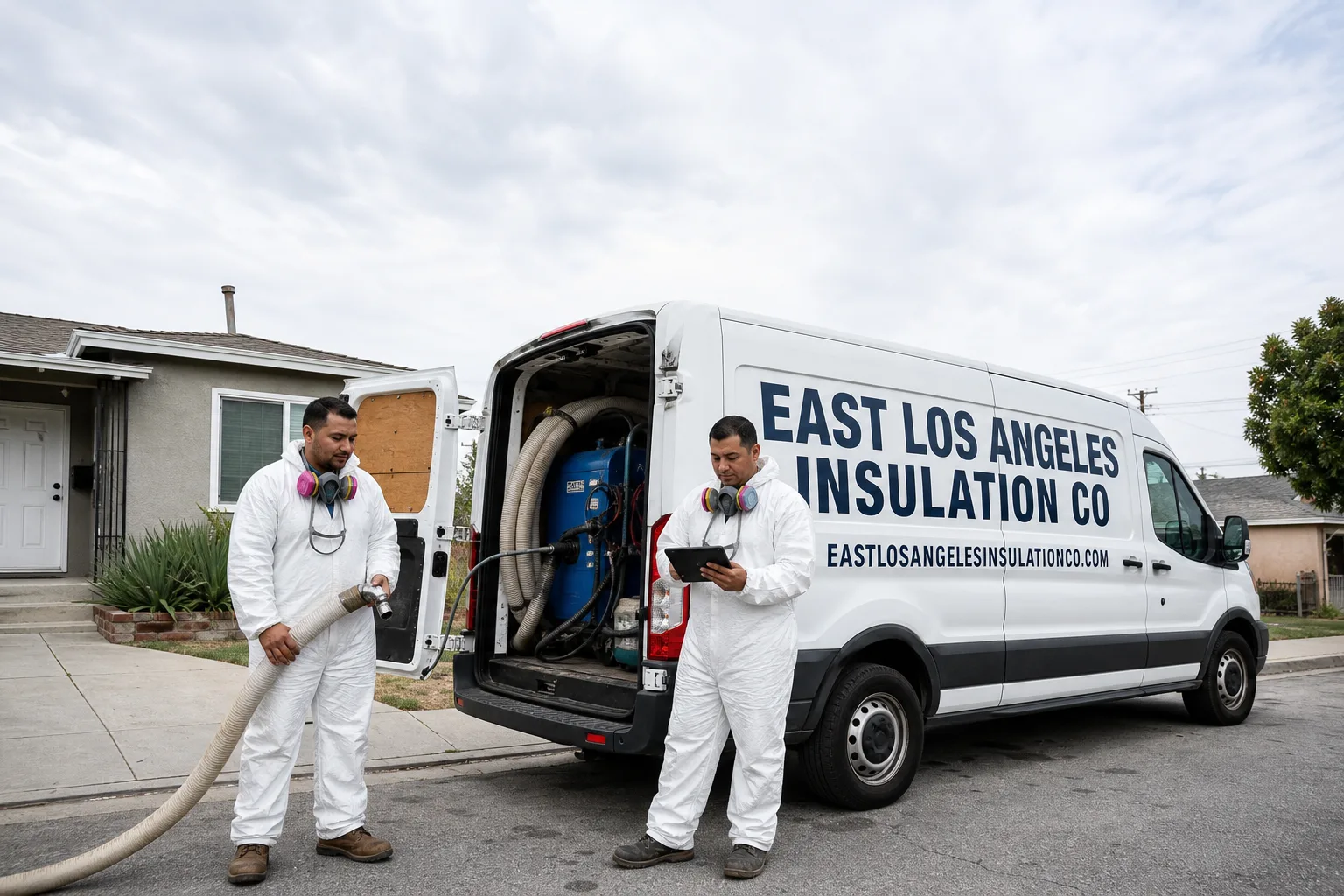
Attic insulation in Rolling Hills Estates usually costs between $1,800 and $6,500 depending on the scope, and most jobs are finished within a day or two. On a half-acre-plus equestrian property off Palos Verdes Drive North, we’re often working on more than one structure: the main house, the detached barn, and sometimes the tack room too. If you’ve noticed settled batts in a 1960s rancher or condensation dripping from an uninsulated barn ceiling, call (866) 566-0304 and we’ll come take a look, usually within 48 hours. We know these hillside streets, the marine layer, and the way original 1950s and 60s attics here were built.
Why East Los Angeles Insulation Co Is Rolling Hills Estates’s Preferred Attic Insulation Company
We’ve worked on more than a few homes between the Peninsula Center and the equestrian estates off Highridge Road, and we understand that an attic in Rolling Hills Estates rarely follows a standard template. You might have open-beamed ceilings in the living room, exposed rafter tails under low-slope eaves, and a detached barn with no insulation at all. That’s not a problem for us. As a dedicated insulation contractor, we diagnose the actual issue on each structure rather than treating every call as a simple blow-in. When Ruben Acosta leads a job here, he’s looking at ventilation, vapor control, and fire-resistant detailing as closely as R-value. Homeowners across the Palos Verdes Peninsula call us because we install all three methods – attic, spray foam, and blown-in – in-house, and we stock products most single-brand crews never carry.
Radiant Barrier in Rolling Hills Estates
Radiant barrier in Rolling Hills Estates is one of the more misunderstood products we install. In a mild marine-layer climate with only modest summer cooling loads, a radiant barrier won’t deliver the dramatic energy savings it might in the Inland Empire. What it does well here is reflect heat away from attic spaces on the sunny, west-facing slopes above Hawthorne Boulevard, where unshaded roofs still pick up afternoon sun even through the haze. It also helps keep heat from radiating down into living spaces through exposed-beam ceilings, which are common in the custom estates and 1950s ranches across 90505.
When a Radiant Barrier Makes Sense
A homeowner asked us recently whether a radiant barrier could lower her cooling bill in a house that rarely runs the AC. In her case, the better investment was air-sealing and top-up insulation. But when we see a low-slope roof with direct western exposure and an attic that bakes by 3:00 p.m. even in June, a radiant barrier on the underside of the roof deck makes a measurable difference. It’s also a smart add-on when we’re already cleaning out contaminated insulation and prepping the attic for new work. Radiant barrier installation in Rolling Hills Estates typically runs $1,200 to $2,800 for an average attic, depending on rafter spacing and roof geometry.
Radiant Barrier and WUI Detailing
Rolling Hills Estates sits in a high-fire-severity Wildland-Urban Interface zone, and that changes how we think about attic materials. A radiant barrier is not a fireproofing product, but the way it’s installed matters around eave vents and gable openings where embers enter during a wind-driven fire. We keep the barrier off the vent paths and work around the same detailing we’d use for vent baffles. On hillside properties where dry brush meets the property line, this isn’t a nice-to-have. It’s part of doing the job correctly.
Attic Cleaning Services in Rolling Hills Estates
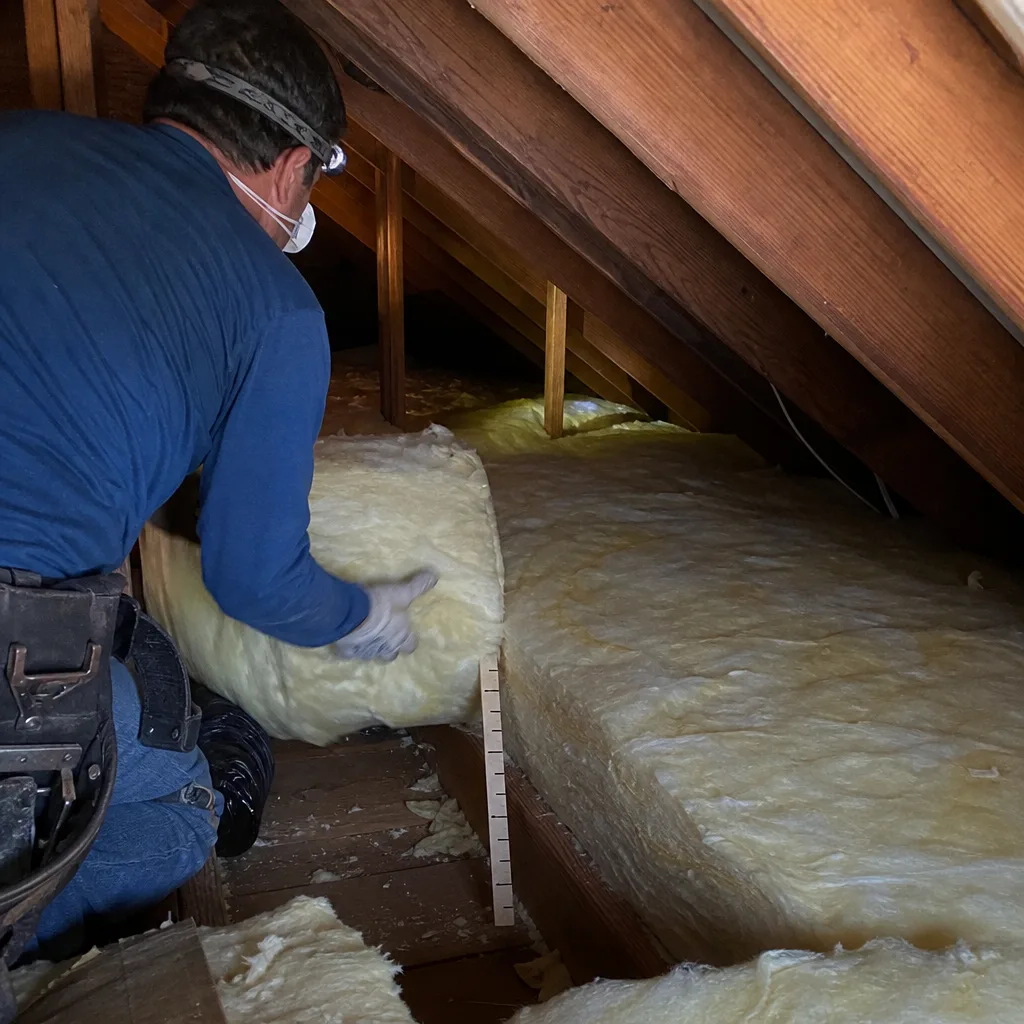
Attic cleaning services in Rolling Hills Estates usually begin because a homeowner opened the attic hatch and found what looked like a rodent highway. The 1950s through 1980s ranches around Dapplegray Lane and the streets off Crenshaw Boulevard were built with vented attics and original fiberglass batts that all too often become nesting material. By the time we arrive, the batts are settled, compressed, and contaminated with droppings and urine that compromise indoor air quality. We remove the old material, HEPA-vac the space where needed, sanitize surfaces, and prepare the attic for new insulation. A full attic cleanout in this area typically runs $900 to $2,400, depending on attic size, access, and the extent of contamination. If the property has a tack room or barn with spoiled insulation, we handle that too.
From Contaminated Batts to Clean Space
On a hillside street off Palos Verdes Drive North, we were called to a 1960s rancher whose original fiberglass batts had settled to half their depth and were rodent-contaminated. While there, the owner mentioned condensation dripping on the tack room ceiling in the detached barn. We cleaned out the old batts, air-sealed the attic floor, blew in Owens Corning fiberglass to the existing joist depth, and installed a vapor-retarder and vent baffles in the barn’s exposed-rafter assembly to stop the drip. That’s the kind of job you can’t plan from a phone script. You have to see the property.
Why Attic Cleaning Before Insulation Matters
Blowing new insulation over old contaminated batts doesn’t fix the air quality issue, and in some cases it makes it worse by trapping moisture and odor below the fresh layer. In a foggy coastal climate, trapped moisture accelerates mold growth against the underside of the roof deck. We always recommend a cleanout before a top-up when we find droppings, significant settling, or visible dust accumulation in the existing material.
Trusted Brands We Service in Rolling Hills Estates
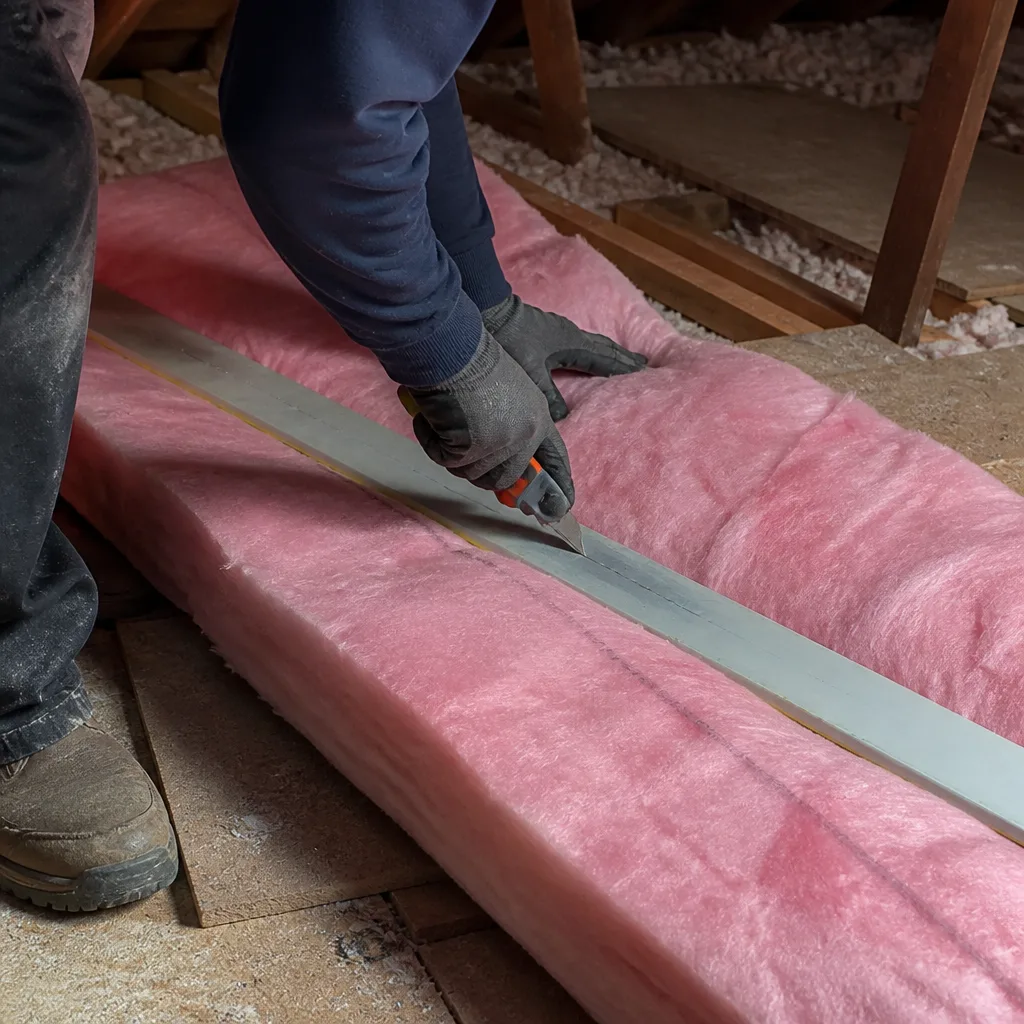
We stock and install eight professional-grade brands, but the ones that come up most often on Rolling Hills Estates jobs are GreenFiber for recycled-content blown-in coverage, Owens Corning for dependable fiberglass batts, and Icynene or Demilec when a sealed spray foam application makes sense for an open-beamed or unvented assembly. Because we carry multiple brands, we’re not steering you toward whatever happens to be loaded on the truck. We match the product to the structure. For Rolling Hills Estates homeowners, that often means Owens Corning fiberglass for a standard vented attic, GreenFiber for a top-up over air-sealing, and Demilec closed-cell foam where we need a vapor barrier and air seal in one step. Parts and materials for local jobs are stocked in our East Los Angeles facility, so we don’t lose days waiting on supply runs.
Common Attic Insulation Problems We See in Rolling Hills Estates Homes
- Settled and rodent-contaminated original fiberglass batts. The 1950s to 1980s ranches throughout 90505 were built with fiberglass batts that eventually compress under their own weight. Rodents find them, nest in them, and leave behind contamination that drags down indoor air quality.
- Condensation in uninsulated barns and tack rooms. This is the uniquely Rolling Hills Estates problem. Marine-layer moisture hits the underside of an uninsulated metal or composition roof on a detached barn, and by morning it’s dripping onto stall ceilings. Owners assume it’s a roof leak. It’s usually just missing insulation and vapor control.
- Inadequate ventilation in open-beamed and low-slope assemblies. Many custom estates here have exposed rafter tails and low-slope roof sections that weren’t designed with enough airflow. Trapped moisture leads to mold growth and dry rot, which is far more common in this foggy coastal climate than in inland LA.
- Uneven temperatures between rooms. When a sprawling single-story rancher has a hot west wing and a cold east wing, the culprit is often inconsistent insulation depth in the attic. We find some bays underfilled, some fully bare, and some where original batts have been moved around during old electrical or plumbing work.
Pricing for Attic Insulation in Rolling Hills Estates, CA
Attic insulation in Rolling Hills Estates runs on a different cost curve than flat-lot LA neighborhoods because the properties are larger and often include outbuildings. Here are real numbers for the work we do most:
- Blown-in attic insulation: $1,800 to $4,500 for a typical 1,500 to 2,500 square foot attic.
- Attic batt insulation: $2,200 to $5,400, depending on R-value and whether we’re replacing old material or insulating a new space.
- Attic insulation top-up: $900 to $2,800, assuming the existing insulation is clean and only needs additional depth.
- Attic insulation replacement: $2,500 to $6,500, including removal, disposal, air-sealing, and new material.
- Attic baffles and ventilation prep: $600 to $2,000, depending on rafter count and eave access.
- Detached barn or tack room insulation: $1,500 to $5,000, depending on size, roof assembly, and whether we’re doing exposed-rafter work or simple batts.
What moves the number: attic accessibility, contamination level, roof geometry, and whether the work includes a half-dozen baffles or a forty-foot barn. We give free, itemized estimates so you know what you’re paying for before we start. Call (866) 566-0304 and we’ll schedule a walk-through.
Key Takeaways: Attic insulation in Rolling Hills Estates usually costs $1,800 to $6,500. Detached barns and tack rooms are a common part of the scope here. Marine-layer moisture makes vapor control and ventilation as important as R-value. Wildland-Urban Interface fire considerations affect how we detail every attic we touch. Estimates are free, and we typically reach Rolling Hills Estates within 48 hours.
We Also Serve Cities Near Rolling Hills Estates
Our team covers Rolling Hills Estates and the surrounding peninsula and South Bay communities, including Manhattan Beach, Torrance, Lomita, and Palos Verdes Estates. Whether your property is off Palos Verdes Drive North or closer to the coast, our Attic Insulation crew handles the work in house. Learn more about our service area on our Rolling Hills Estates page.
Serving Rolling Hills Estates, CA - Our Local Coverage Area
We serve Rolling Hills Estates and nearby communities. Use the map below to see the area we cover. If you’re nearby, we can almost certainly help.
FAQs About Attic Insulation in Rolling Hills Estates
Yes, in almost every case we see on Rolling Hills Estates horse properties, it’s condensation, not a leak. The marine layer saturates the air overnight, warm air from the stalls rises, and that moisture condenses on the underside of an uninsulated roof. Adding insulation and a vapor retarder to the tack room ceiling stops it. Call (866) 566-0304 and we’ll confirm what’s happening with a quick site visit.
They often do. Open-beamed ceilings mean you can’t simply lay batts across a flat attic floor, and exposed rafter tails create continuous ventilation paths that can short-circuit air-sealing. We look at the roof assembly itself and choose between spray foam, vent baffles, and vapor-retarder placement depending on the framing. The goal is moisture control first, R-value second.
In some cases yes, but in Rolling Hills Estates we usually recommend removal first. The original batts in these homes are frequently rodent-contaminated and compressed to a fraction of their original R-value. Adding new material on top traps the contamination and moisture below the surface. We’ll give you an honest assessment, and the quote covers both options so you can compare.
It depends on exposure and roof type. A west-facing roof with no shade on a hillside above Hawthorne Boulevard will still pick up significant afternoon heat, and a radiant barrier cuts that transfer. On a heavily shaded north-facing lot near the Peninsula Center, you’d get better return from air-sealing and deeper insulation. We’ll tell you which is the better spend before quoting anything.
We treat each structure as its own job. For barns, that means assessing whether we need vapor control in an exposed-rafter assembly or simple batts in a framed ceiling. For tight hillside access, our crews arrive with the equipment sized for the driveway and the gate clearance. Materials move by hand when needed. This is normal work for us on Rolling Hills Estates lots.
Written by Ruben Acosta, Owner at East Los Angeles Insulation Co, serving Rolling Hills Estates and the Palos Verdes Peninsula.