
Insulation Company in Rolling Hills Estates, CA
Blown in insulation in Rolling Hills Estates addresses a specific set of problems: settled and rodent-contaminated fiberglass batts in 1950s-to-1980s ranchers, exposed rafter tails that leak conditioned air, and detached barns and tack rooms where condensation drips onto stall ceilings. The marine layer off the Palos Verdes Peninsula keeps heating and cooling loads modest, so the work we do here is less about chasing extreme R-values and more about moisture management, air sealing, and fire-resistant detailing in a Wildland-Urban Interface zone. East Los Angeles Insulation Co has served Rolling Hills Estates since 2018, and we stock eight brands so the product actually matches the house. Call (866) 566-0304 for a free estimate.
Why Rolling Hills Estates Homes Are Different
Rolling Hills Estates isn’t a tract-home town. Most properties sit on half-acre or larger lots with single-story California ranchers and custom estates built between the 1950s and 1980s. Many have open-beamed ceilings, exposed rafter tails, and vented attics that were originally insulated with fiberglass batts now decades past their useful life. Those batts are frequently settled, compressed, or contaminated by rodents that find their way into the large, accessible attic spaces common in this housing stock.
The climate here shapes our recommendations differently than in the Valley or the LA Basin. Morning fog and persistent coastal moisture mean condensation in attics and outbuildings is a bigger problem than summer heat gain. We see mold on the underside of roof sheathing in vented attics where insulation was packed too tightly against the eaves, blocking airflow. That’s a detailing failure, not an R-value problem. On the horse properties off the hillside streets, detached barns and tack rooms are usually uninsulated altogether, and owners call us because water is dripping from the stall ceiling onto hay and tack. That job has nothing to do with the main house.
Fire safety is also part of the conversation in Rolling Hills Estates, which sits in a high-fire-severity zone on the peninsula. The insulation we recommend for exposed-rafter assemblies and outbuildings often differs from what we’d specify for a standard suburban attic elsewhere. Mineral wool and closed-cell spray foam have roles here that fiberglass alone can’t fill.
Our Main Rolling Hills Estates Services
Two insulation services dominate our work in Rolling Hills Estates: attic insulation and spray foam. Attic work covers the vented attics over the living areas, while spray foam handles the harder envelope details: exposed rafter bays, open-beamed ceilings, and the tight, irregular cavities in detached buildings.
Attic Insulation in Rolling Hills Estates
Attic insulation in Rolling Hills Estates usually means removing decades-old, settled fiberglass batts and re-insulating a vented attic that sits over a single-story rancher or custom estate. The marine layer means we’re paying close attention to ventilation baffles and vapor control, not just stacking more R-value. Rodent contamination is common in the large attics we see off the hillside streets, so removal and air sealing come before new insulation goes in. Attic Insulation in Rolling Hills Estates involves a full inspection of the existing conditions, including the exposed rafter tails that often leak air at the eaves.
Spray Foam Insulation in Rolling Hills Estates
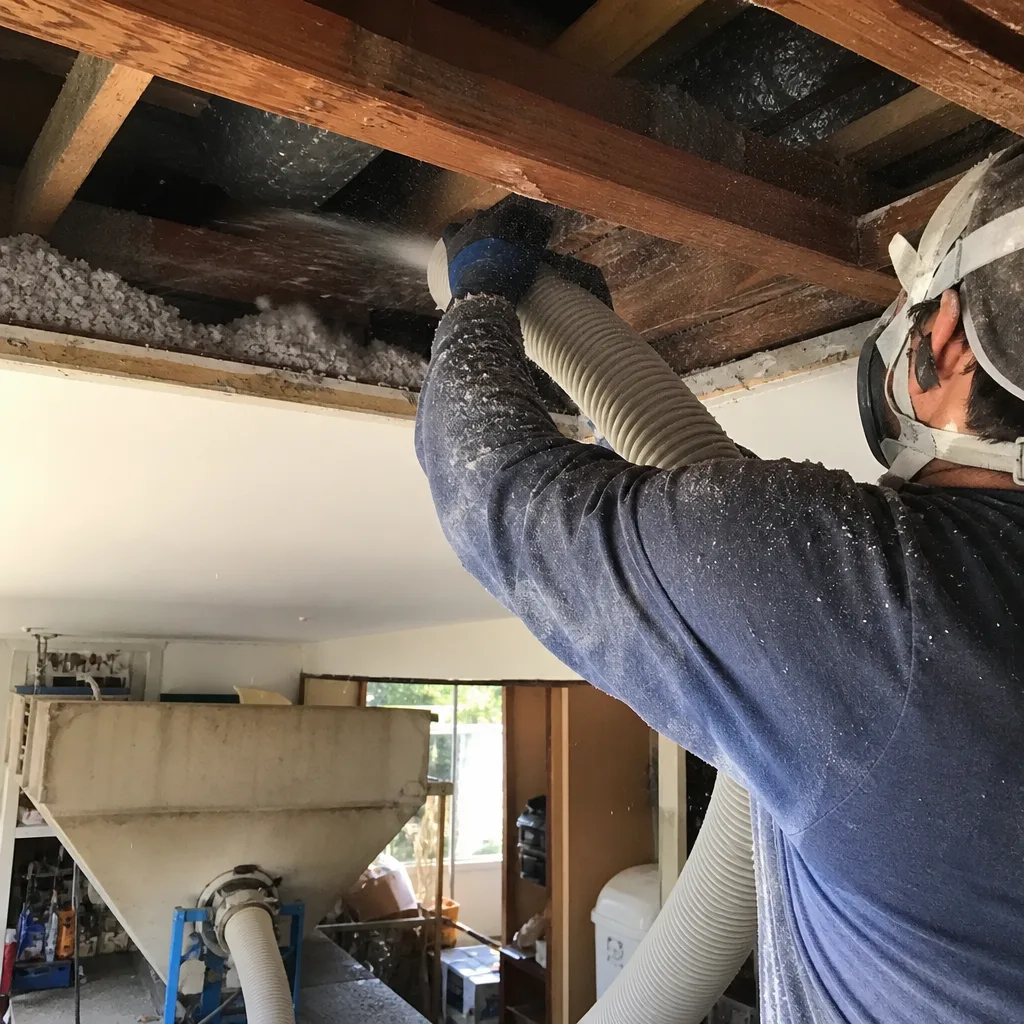
Spray foam insulation in Rolling Hills Estates fits the homes with open-beamed ceilings and exposed rafters where batt insulation would look wrong and perform worse. Closed-cell foam adds structural rigidity and acts as a vapor retarder, which matters in a climate where morning dew and fog are constant for much of the year. We also spray foam the detached barns and tack rooms where owners want condensation stopped at the roof deck. Spray Foam Insulation in Rolling Hills Estates uses Icynene and Demilec products, both with established field performance records in coastal environments.
Blown In Insulation in Rolling Hills Estates
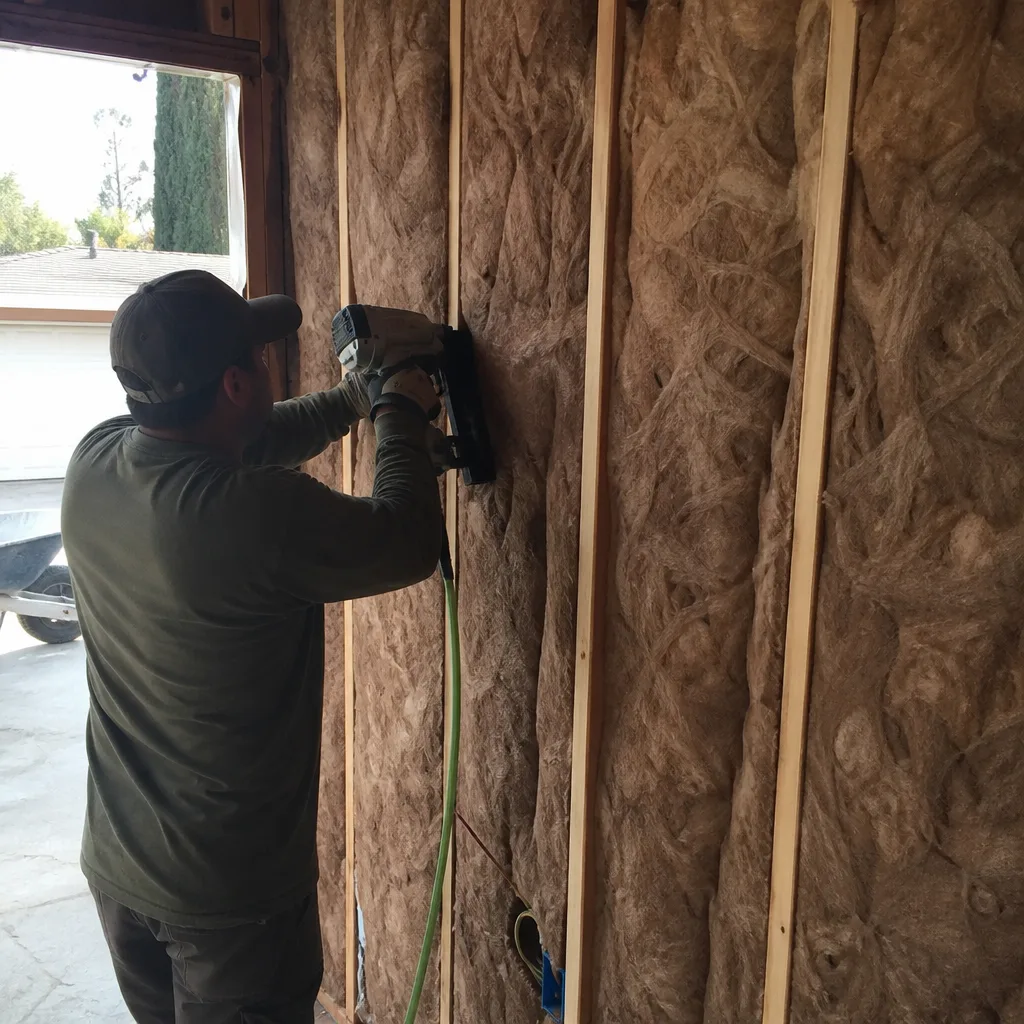
Blown in insulation in Rolling Hills Estates is the most common fix we perform on the 1950s-to-1980s ranchers that dominate the local housing stock. Original fiberglass batts in vented attics are almost always settled, compressed, or contaminated by rodents after 40 to 70 years, and blown-in material fills the gaps and voids those batts leave behind. Because marine-layer moisture is the real enemy here, not extreme heat or cold, we focus on achieving even coverage and keeping the eaves clear for ventilation. We also blow insulation into detached garages, barns, and tack rooms where condensation drips onto stall ceilings. Read more about this service on our Blown In Insulation page.
Cellulose Insulation
Signs you need it
Your existing attic batts are settled below the joist tops, you see rodent droppings or nesting material mixed into the insulation, or rooms feel drafty despite the thermostat holding steady.
What it costs in Rolling Hills Estates
Blown-in cellulose for a typical Rolling Hills Estates attic runs $2,100 to $3,900, depending on the square footage and whether old material needs removal first.
How we do it
We remove contaminated or compressed material if needed, air-seal the ceiling plane and any penetrations, then blow GreenFiber cellulose to an even depth across the attic floor while keeping soffit vents clear.
Blown In Attic Insulation
Signs you need it
Your attic has bare patches or thin spots in the existing insulation, upstairs rooms run warmer than the rest of the house on summer afternoons, or you’ve noticed moisture staining on the ceiling below the attic.
What it costs in Rolling Hills Estates
Blown-in attic insulation in Rolling Hills Estates typically falls between $2,400 and $4,400 for a full attic re-insulation, including air sealing.
How we do it
We run an insulation blower from a truck-mounted unit, feed loose-fill material through a hose into the attic, and level it to a consistent depth that meets the R-value target we set after inspecting the existing conditions.
Blown In Fiberglass Insulation
Signs you need it
Your current fiberglass batts are torn, crushed, or flattened from foot traffic, or you want an insulation that holds its loft longer in an open attic.
What it costs in Rolling Hills Estates
Blown-in fiberglass in Rolling Hills Estates generally costs $2,000 to $3,600 for an attic of 1,200 to 2,000 square feet.
How we do it
We blow loose-fill fiberglass from one of our brand partners, Owens Corning, over the existing insulation or into a cleaned attic floor, keeping the depth even and the eaves ventilated.
What Blown In Insulation Costs in Rolling Hills Estates
| Item | Typical range in Rolling Hills Estates |
|---|---|
| Air sealing (attic floor prep) | $665 – $1,108 |
| Blown-in cellulose (typical attic) | $2,100 – $3,900 |
| Blown-in fiberglass (typical attic) | $2,000 – $3,600 |
Rodent contamination removal, extra-deep attics, and detached barn or tack room work will push the total higher. We give upfront pricing before any work starts, so there are no surprise add-ons.
How much does blown in insulation cost in Rolling Hills Estates?
Blown in insulation in Rolling Hills Estates typically costs $2,000 to $4,400 for a standard attic, with air sealing adding $665 to $1,108. Exact pricing depends on square footage and existing conditions. Call (866) 566-0304 for a free estimate.
Can you install blown in insulation in a barn or tack room?
Yes. We blow insulation into detached barns, tack rooms, and garage ceilings throughout Rolling Hills Estates. The work is the same process as an attic blow-in, sized for the smaller square footage, and we keep ventilation clear to prevent condensation.
Brands We Service in Rolling Hills Estates
We install GreenFiber cellulose, Owens Corning fiberglass, Icynene and Demilec spray foam, and Rockwool mineral wool in Rolling Hills Estates. Our trucks carry these products from the East Los Angeles yard to the peninsula, so turnaround for a standard attic job is typically same-week. See our brands for details on each product line.
Pricing for Insulation Company in Rolling Hills Estates, CA
| Service | Typical range in Rolling Hills Estates |
|---|---|
| Air sealing (attic floor prep) | $665 – $1,108 |
| Blown-in fiberglass (typical attic) | $2,000 – $3,600 |
| Blown-in cellulose (typical attic) | $2,100 – $3,900 |
| Blown-in attic insulation (full re-insulation) | $2,400 – $4,400 |
| Batt insulation (attic) | $1,423 – $3,367 |
| Batt insulation (walls) | $2,178 – $5,700 |
| Spray foam (average price) | $2,700 – $9,900 |
| Spray foam (200 sq ft open-cell) | $1,600 – $3,200 |
| Spray foam (200 sq ft closed-cell) | $2,000 – $2,700 |
| Attic insulation (average price) | $2,400 – $5,700 |
Prices in Rolling Hills Estates rise when we’re dealing with rodent contamination, difficult attic access on hillside lots, or detached buildings that need insulation from scratch. We quote a fixed price after inspecting the property, so what we show you is what you pay.
Neighborhoods We Serve in Rolling Hills Estates
We work throughout the 90505 ZIP and the surrounding hillside streets of Rolling Hills Estates. Our crews are on the peninsula regularly, so scheduling a visit is usually a matter of a day or two, not weeks.
- Rancho Palos Verdes border areas
- Palos Verdes Drive North corridor
- Horse properties off the Silver Spur area
- Custom estates near Empty Saddle Club
- Hillside lots along Crest Road
Service Area – Cities Near Rolling Hills Estates
East Los Angeles Insulation Co also serves the surrounding South Bay and Palos Verdes Peninsula communities. If you’re in Manhattan Beach, CA, Torrance, CA, Lomita, CA, or Palos Verdes Estates, CA, we bring the same multi-brand, three-method approach to your insulation job. Same crews, same upfront pricing, same eight brands.
Serving Rolling Hills Estates, CA - Our Local Coverage Area
We serve Rolling Hills Estates and nearby communities. Use the map below to see the area we cover. If you’re nearby, we can almost certainly help.
FAQs About Insulation Company in Rolling Hills Estates
We’re on the Palos Verdes Peninsula most weeks, so we can typically schedule an inspection within a couple of days and start work the same week for most attic and blown-in jobs. Larger spray foam projects may need extra lead time for setup. Call (866) 566-0304 to check current availability.
Most standard insulation work, including blown-in attic insulation and spray foam in existing cavities, doesn’t require a permit in Rolling Hills Estates. If the work involves structural changes or unusually large additions to a detached structure, we’ll advise you on what the city requires before we start.
Yes. Detached barns, tack rooms, and garages are a regular part of our work in Rolling Hills Estates. We inspect the structure for ventilation and moisture issues, then recommend the right insulation, whether that’s blown-in cellulose, spray foam, or batts, to stop the condensation problems these buildings usually have.
What happens when you call
- 1A real person answersNo phone trees. Talk to a local insulation pro.
- 2You get an upfront price rangeHonest numbers before anyone is dispatched. No surprises.
- 3We come out and measureLicensed & insured, at a time that suits you. The visit and the quote are both free.
- 4You get the price in writingLine-itemed, yours to keep, and nothing starts until you say go.
What Rolling Hills Estates Customers Say
"Attic was at maybe R-11 from the 1970s and blown in over the top would have just buried the problem. They removed the old material, air sealed the top plates and penetrations first, then blew in to R-49. The upstairs is a completely different house in August."
- Jason Walsh"Handled the utility rebate paperwork, which knocked a real amount off the final cost."
- Rosa Martinez"Plastic laid from the front door to the attic hatch and they vacuumed the hallway afterward."
- Diego Castillo